2026 Best 3 Axis CNC Milling Machine for Global Buyers?
Choosing the best 3 axis cnc milling machine for 2026 requires more than comparing prices or polished brochures. Global buyers need evidence from the shop floor. A machine may cut aluminum smoothly, yet struggle with hardened steel, unstable fixtures, or long production runs. The right choice depends on spindle power, travel range, repeatability, controller usability, tooling access, and local technical support. These details become real when a 12-inch workpiece vibrates during a deep pocket cut.
W. Edwards Deming, a respected manufacturing quality expert, said, “Quality comes not from inspection, but from the improvement of the production process.” His principle remains useful here. A reliable 3 axis cnc milling machine should support consistent processes, not merely produce one impressive sample part. Buyers should examine documented accuracy, service response times, operator training, and replacement-part availability. They should also ask whether the machine fits regional voltage, safety requirements, software standards, and maintenance skills.
No ranking can fit every factory. That is the uncomfortable part. A compact machine may outperform a larger model in a crowded workshop. A cheaper package may become expensive after weak support, frequent downtime, or difficult calibration. This guide compares leading 2026 options through practical criteria, including cutting performance, control systems, build quality, automation readiness, and total ownership cost. Some conclusions remain imperfect because factory conditions differ. A test cut is still wiser than a confident promise.
3-Axis CNC Milling: Definition, Axes, and 2026 Buyer Scope
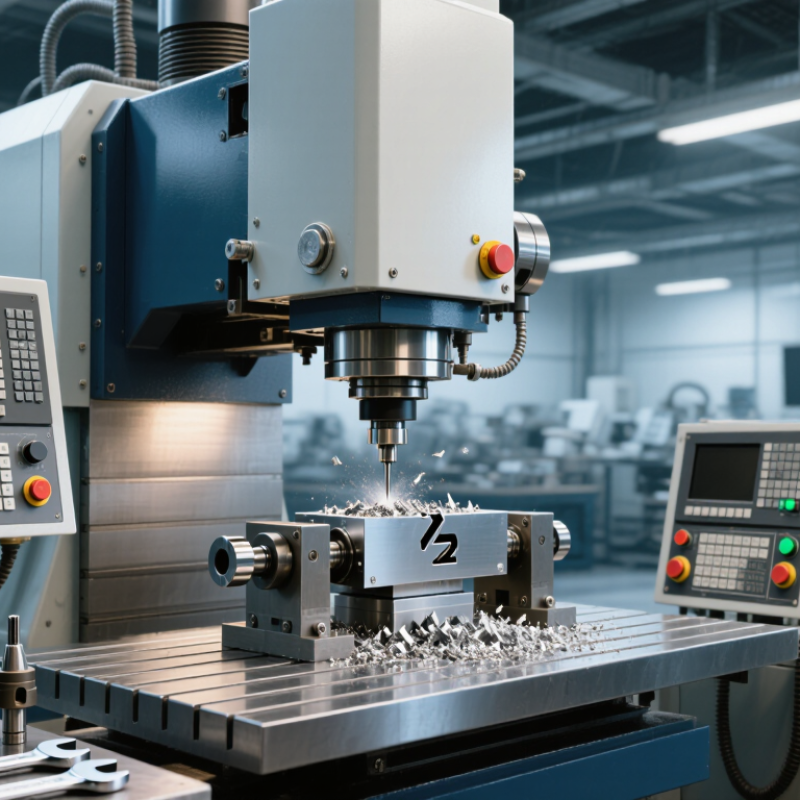
A 3-axis CNC milling machine moves its cutting tool along X, Y, and Z axes. X controls left-to-right travel. Y manages front-to-back movement. Z adjusts vertical cutting depth. Together, these axes shape blocks, plates, and simple three-dimensional parts. It sounds simple. However, accuracy depends on more than axis count. Spindle stiffness, guideway design, backlash control, and thermal stability also influence the finished surface.
For 2026 buyers, the best machine depends on production goals, not advertising claims. A small workshop may need a compact work envelope, reliable automatic tool changing, and easy operator training. A metalworking plant may prioritize rigid cast construction, higher spindle torque, coolant management, and repeatability below 0.01 mm. Always compare the actual cutting range with your largest workpiece. A large table is useless if the spindle lacks clearance.
Global buyers should examine electrical requirements, controller language, installation support, spare-part access, and documented inspection results. Ask for test-cut samples using your material. Aluminum, steel, and hardened alloys place different demands on tooling and spindle power. Also check service response across time zones. A low purchase price can become expensive after one control fault. Some specifications look impressive but remain difficult to verify. That is where careful questions matter. The “best” choice may still require compromises between speed, precision, budget, and local technical support.
Core Specifications: 10,000–24,000 RPM Spindles and ±0.005 mm Accuracy
2026 Best 3 Axis CNC Milling Machine for Global Buyers?
A 3 axis CNC milling machine with a 10,000–24,000 RPM spindle suits aluminum, plastics, and light steel work. Higher speed supports smaller cutters and cleaner edges. However, maximum RPM is not always the best choice. Tool diameter, material hardness, and cutting depth should guide the setting. A 12 mm cutter may perform poorly at extreme speed.
Accuracy rated at ±0.005 mm sounds impressive, but buyers should inspect the testing method. Was the measurement taken after machine warm-up? Was thermal expansion controlled? These details matter. In practical evaluations, check backlash, repeatability, spindle runout, and table movement. A test cut on a 100 mm square can reveal visible corner errors. Keep the inspection report.
The machine should maintain stable performance, not only reach a specification once. Ask for positioning and repeatability data under realistic loads. Confirm whether ±0.005 mm applies to the entire working area. It may describe a limited test condition. That distinction is easy to miss.
A reliable machine also needs rigid guideways, balanced tool holders, effective cooling, and clear maintenance instructions. Global buyers should verify electrical compatibility, controller language, spare-part access, and remote technical support. I would leave room for uncertainty. Operator skill, tool quality, temperature, and clamping can change the final result. A perfect brochure cannot correct poor setup.
Global Compliance: ISO 230-2 Accuracy, CE Marking, and 220–480 V Power
For global buyers, a three-axis CNC milling machine must prove accuracy beyond a sales specification. ISO 230-2 testing evaluates positioning accuracy and repeatability under defined conditions. Request the complete test report, including axis travel, measurement method, temperature, and compensation settings. A machine may perform differently after shipping, installation, and thermal changes. That detail matters.
Look for a valid CE marking process covering the machine’s applicable European safety and electromagnetic requirements. CE marking is not a universal quality certificate. Ask for the Declaration of Conformity, risk assessment information, and relevant technical documentation. Check whether guards, emergency stops, electrical cabinets, and operating instructions match the delivered configuration. Paperwork should describe the actual machine.
Power compatibility also deserves an on-site check. A specification showing 220–480 V may cover several configurations, not every voltage automatically. Confirm phase count, frequency, current demand, transformer requirements, grounding, and protection devices with a qualified electrician. In practice, an incorrect voltage tap can delay commissioning or damage equipment. We have seen installation plans overlook local frequency. That mistake is expensive. Temperature control is another concern, because accuracy can drift during long cuts. A factory test may look excellent, yet a workshop with unstable power and heat can produce different results. Choose documented evidence over confident language.
Ownership Analysis: 3–5-Year Costs, Maintenance, and Payback Metrics
2026 Best 3 Axis CNC Milling Machine for Global Buyers?
Ownership Analysis: 3–5-Year Costs, Maintenance, and Payback Metrics
A three-axis CNC milling machine should be judged by ownership cost, not purchase price alone. A realistic calculation includes installation, operator training, tooling, electricity, software, coolant, and scheduled service. For a small production cell, these expenses can add 20–35% during the first year. That estimate changes with workload, local labor rates, and shipping conditions.
Maintenance becomes more predictable when operators check lubrication, spindle noise, coolant concentration, and chip buildup daily. Monthly inspections should include belts, filters, electrical cabinets, and tool holders. Downtime is expensive. One failed spindle bearing can interrupt production for several days and delay customer orders. Keep critical consumables available, but avoid storing every possible spare part.
Payback depends on machine utilization and the value of completed parts. A machine running 30 hours weekly may recover its cost in three to five years. Higher utilization can shorten that period, but only when quality remains stable. My first cost spreadsheet overlooked fixture replacement and rejected parts. That mistake changed the payback estimate by several months. Buyers should compare three scenarios: conservative, expected, and high utilization. Record actual cycle times after installation, rather than trusting sales estimates. A 12-minute cycle may become 15 minutes after loading, inspection, and tool changes. That small difference matters across thousands of parts.
2026 Best 3-Axis CNC Milling Machine for Global Buyers
Ownership analysis: estimated 3–5-year costs, maintenance, and payback metrics
This illustrative benchmark uses a mid-range 3-axis vertical CNC milling machine with an estimated purchase and installation cost of
$42,000, approximately 1,500 spindle hours per year, and typical industrial electricity and maintenance rates.
Estimated ownership cost is approximately $66,000 after three years and $82,000 after five years.
Assuming the machine replaces about $2,400 per month in outsourced machining, the indicative payback period is approximately
18 months. Actual results vary with utilization, labor, tooling, financing, and local service costs.