
Menü öffnen Menü schließen

What Are the Top Types of Filter Units in 2026?

Which filter unit will matter most in 2026? The answer depends on what needs removing, how much air or liquid must pass through, and the system’s operating limits. In buildings, HEPA and higher-efficiency HVAC units target airborne particles; industrial settings may favor bag, cartridge, or electrostatic collectors. Liquid systems use other designs, including cartridge and membrane units. There is no universal winner.

The market is growing, but that does not make every product a sound choice. Grand View Research’s Air Filters Market Size, Share & Trends Analysis Report estimated the global air filters market at USD 15.3 billion in 2023 and projected a 6.3% compound annual growth rate from 2024 to 2030. That forecast signals continued investment, not proof that one filter type fits every site. Check pressure drop, airflow, maintenance intervals, and verified efficiency ratings. A filter that looks impressive on paper can still strain an undersized fan.

ASHRAE filtration researcher William Bahnfleth’s work supports a useful broader principle: filtration should be considered alongside ventilation and the building’s overall clean-air strategy. That is a paraphrase, not a direct quotation. The distinction matters. Real rooms have dusty return grilles, changing occupancy, and tight equipment spaces. Sometimes the practical answer is less elegant than the brochure.

This guide compares the leading Filter Units expected to shape choices in 2026, from HVAC and HEPA systems to industrial and liquid-filtration designs. It focuses on what each type captures, where it performs best, and what operators should verify before buying.
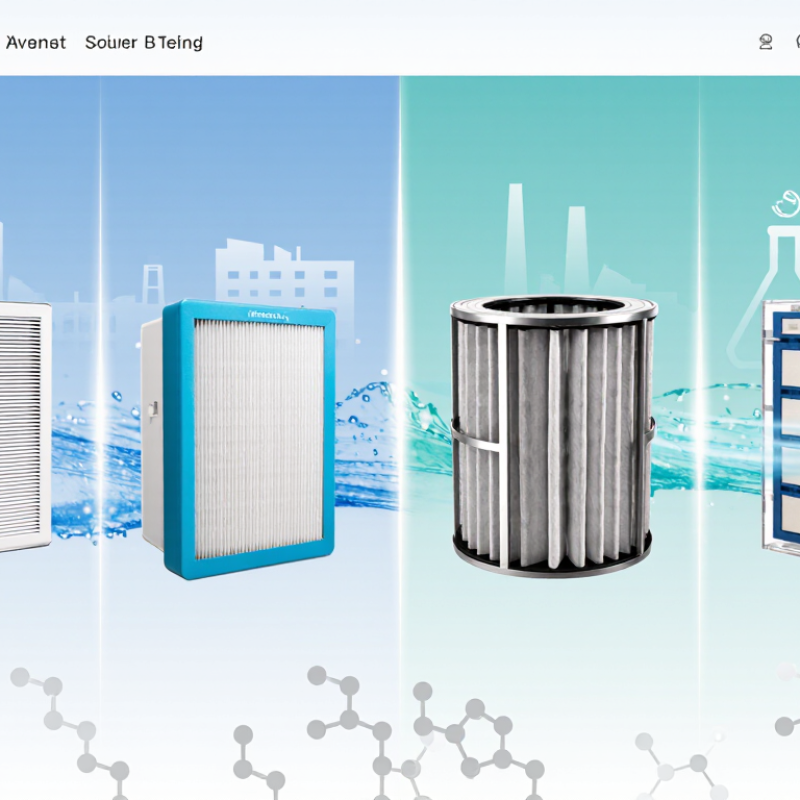
What Are the Top Types of Filter Units in 2026?

What Is a Filter Unit and How Does It Work?

A filter unit removes unwanted particles from air or liquid as the material passes through a filtering element. A fan, pump, or natural pressure difference moves the flow through the unit. The element captures contaminants while allowing cleaner material to continue. Simple in principle. The details matter.

Different units use different methods. A cartridge holds particles within pleated media, while a bag filter traps them in a fabric surface. Air systems may use fine-fiber media to capture smaller particles; some high-efficiency units are designed for demanding cleanliness needs. No filter catches everything. Performance depends on particle size, airflow, media condition, and a proper seal around the element. In a workshop, a clogged filter can reduce airflow and strain equipment. A pressure reading or visible buildup can signal that inspection is due, though neither tells the whole story. Check the unit’s rated conditions and replace or clean its element as specified. In practice, maintenance schedules sometimes need adjustment; real dust loads are rarely predictable.

How Are Filter Units Classified by Filtration Method?

Filter units are commonly classified by the way they capture contaminants. Mechanical filters trap particles as air or liquid passes through porous media. Surface filters collect debris on the outer layer, while depth filters hold it within thicker, layered material. Picture dust on a pleated panel or sediment spread through a cartridge. These designs affect pressure drop, dirt capacity, and service intervals.

Adsorption-based units work differently. Activated carbon can bind certain gases, odors, and dissolved organic compounds to its internal surface. It cannot capture every contaminant; contact time and media condition matter. Membrane units separate particles from liquids through very small pores. Microfiltration and ultrafiltration use different pore ranges and operating pressures. Smaller pores are not always better. It is tempting to judge a unit by pore size alone, but that overlooks flow and maintenance needs.

Other methods include electrostatic collection, which attracts charged particles to plates, and centrifugal separation, which spins heavier particles out of a moving stream. A technician can compare particle size, fluid compatibility, pressure loss, and access for replacement. Categories may overlap: one unit might combine a prefilter with carbon or a membrane stage. That can improve treatment, but adds cost and another component to inspect. Test the treated stream against its actual use.

What Are the Top Types of Filter Units in 2026? — How Are Filter Units Classified by Filtration Method?

Filter units are commonly classified by how they capture or remove contaminants. Performance depends on the media, operating conditions, and system design; particle-size ranges below are general examples, not guaranteed ratings.

Filtration Method How It Works Typical Target Common Filter Unit Typical Uses Key Consideration
Depth filtration Fluid passes through a thick, porous medium that captures particles throughout its depth. Particles suspended in liquids; performance depends on media and particle characteristics. Cartridge, bag, or granular-media filter Water treatment, process liquids, and prefiltration Holds contaminants within the media; replacement or cleaning is needed when pressure drop rises.
Surface filtration A screen, fabric, or membrane retains particles primarily at its surface. Particles larger than the effective openings of the filter medium Screen, strainer, or pleated cartridge filter Liquid prefiltration, equipment protection, and coarse solids removal Retained solids can form a surface cake, increasing pressure drop and requiring cleaning or replacement.
Fibrous mechanical filtration Airborne particles are captured by a combination of interception, impaction, and diffusion as air passes through fibers. Dust, pollen, and other airborne particles across a range of sizes Panel, pleated, or bag air filter Ventilation systems, air handlers, and industrial dust control Efficiency and pressure drop vary with filter class, face velocity, loading, and installation.
High-efficiency particulate filtration A dense fibrous medium captures fine airborne particles through several mechanical collection mechanisms. Fine airborne particles, including particles near the most penetrating particle size HEPA filter unit Cleanrooms, healthcare settings, and critical air-cleaning applications Under the U.S. HEPA definition, a filter must remove at least 99.97% of particles 0.3 micrometers in size when tested under specified conditions; fit and sealing matter.
Electrostatic precipitation Particles receive an electrical charge and are attracted to oppositely charged collection plates. Particulate matter carried in gas streams Electrostatic precipitator Large-scale industrial exhaust and combustion-gas cleaning Collection performance depends on particle properties, gas conditions, and equipment operation; collected material must be removed from the plates.
Inertial separation Changes in gas-flow direction cause particles with sufficient inertia to separate from the flow. Relatively coarse dust and droplets Cyclone separator or inertial separator Dust collection and pre-separation ahead of finer filters Separation depends on particle size, density, airflow, and separator geometry; fine particles may pass through.
Adsorption Contaminant molecules adhere to the internal surface of a porous adsorbent. Selected gases, odors, and vapors Activated-carbon filter unit Odor control, vapor treatment, and selected air or water purification duties Does not generally remove ordinary dust; media selection and replacement depend on the contaminant and loading.
Membrane separation A selective membrane separates components according to size and, depending on the process, other properties. Suspended particles, microorganisms, dissolved macromolecules, or dissolved salts, depending on membrane type Microfiltration, ultrafiltration, nanofiltration, or reverse-osmosis unit Water and process-liquid treatment Membrane processes differ in separation capability; fouling, feed quality, and operating pressure affect performance.

What Are the Main Types of Filter Units in 2026?

Filter units in 2026 generally fall into particulate, gas-phase, and liquid-filtration groups. In homes and offices, pleated HVAC filters catch dust, pollen, and other airborne particles as air passes through a central system. Their performance is commonly rated using MERV. ASHRAE Standard 52.2 reports that MERV 13 filters capture at least 50% of particles measuring 0.3–1 micrometer, and at least 85% of 1–3 micrometer particles. That matters. A higher rating can also increase airflow resistance, so check the equipment’s permitted pressure drop.

Portable units often combine HEPA media with activated carbon. The U.S. Department of Energy’s HEPA definition specifies 99.97% efficiency at 0.3 micrometer under its test conditions. HEPA media target particles; carbon adsorbs some gases and odors. They do different jobs. A thin carbon layer may have limited capacity, and performance depends on the amount of media and replacement schedule. A filter label alone cannot tell you how well a complete unit cleans a room.

Factories and water-treatment systems use bag, cartridge, and membrane filter units. Bag filters hold larger dust loads in ventilation lines, while cartridges offer compact, replaceable elements for liquid or process streams. Membrane units separate particles by pore size, but can clog when feed water contains heavy sediment. Look at the application, flow rate, contaminant size, and maintenance access before comparing types. In real installations, an efficient filter that is changed too late may perform worse than a modest one maintained on schedule.

Where Are Different Filter Unit Types Commonly Used?

What Are the Top Types of Filter Units in 2026?

Where Are Different Filter Unit Types Commonly Used?

Pleated HVAC filters are common in offices, schools, and homes, where they capture airborne particles before air circulates through occupied rooms. The U.S. Environmental Protection Agency’s Residential Air Cleaners: A Technical Summary reports that MERV 13 filters capture at least 50% of particles measuring 0.3–1 micrometers under test conditions. HEPA units are used in hospital isolation rooms, laboratories, and portable air cleaners when finer particle removal is needed. Fit matters: gaps around a filter can undermine its performance. Small detail, big difference.

Activated-carbon units are often installed in kitchens, laboratories, and industrial exhaust systems to reduce certain odors and gaseous pollutants; they do not replace particle filters. In woodworking, metalworking, and cement production, baghouse filters collect dust at the source. The EPA’s Fabric Filter fact sheet notes that properly designed and operated systems can achieve particulate collection efficiencies above 99%.

For water treatment, cartridge and membrane units serve municipal plants, food processing, and pharmaceutical production. The WHO/UNICEF Joint Monitoring Programme reported in 2023 that 2.2 billion people lacked safely managed drinking-water services in 2022, underscoring the importance of effective treatment. Still, one filter type rarely solves every problem. The right choice depends on the contaminant, airflow or water flow, and maintenance conditions.

What Factors Guide the Choice of a Filter Unit?

Choosing a filter unit means matching the actual contaminant, airflow, and operating conditions—not just selecting the highest efficiency rating. Start with the pollutant: coarse dust, fine particles, and vapors need different capture methods. The U.S. EPA reports that concentrations of some indoor pollutants are often two to five times higher than typical outdoor levels. WHO’s 2021 air quality guidelines recommend an annual mean PM2.5 level of 5 μg/m³. These figures set useful context, but they do not predict what one filter will achieve in a specific room.

Then check airflow, available space, maintenance access, and pressure drop. A pleated panel filter suits routine dust control in many ventilation systems; bag filters offer greater dust-holding capacity where airflow is high. HEPA units can capture very fine particles, but their resistance may strain an undersized fan. Not enough. Verify the unit’s tested efficiency and the system’s compatible airflow before buying. Consider replacement cost and how often filters will need changing. A filter that performs well on paper can disappoint if it is poorly sealed or left loaded with dust. I would not choose by efficiency alone; that shortcut overlooks fit, noise, and real maintenance habits.

Article Source: