Top Sealed Wheel Bearing Suppliers Worldwide?
Choosing the top Sealed Wheel Bearing suppliers worldwide requires more than comparing catalog prices. It demands evidence from factories, testing laboratories, and real vehicle applications. Wheel bearings operate near the road, facing water spray, dust, vibration, heat, and changing loads. A small sealing weakness can become a noisy, costly failure.
Industry data confirms the market’s importance. Grand View Research identifies automotive bearings as a major segment within the global bearing industry, supported by vehicle production, replacement demand, and electric mobility. Fortune Business Insights also projects continued growth in the automotive bearing market, driven by stricter reliability requirements and rising vehicle ownership. These reports provide useful direction, but they do not prove supplier quality by themselves.
Quality evidence matters more.
Leading manufacturers usually publish ISO 9001 or IATF 16949 certifications, dimensional tolerances, material specifications, and fatigue-test methods. The World Bearing Association emphasizes correct bearing selection, installation, lubrication, and contamination control. These factors directly influence service life. SKF, Schaeffler, NTN, NSK, Timken, and other established suppliers demonstrate different strengths across passenger vehicles, commercial trucks, trailers, and industrial platforms.
However, no supplier ranking is flawless. Public reports often combine wheel bearings with broader bearing categories. Regional pricing, counterfeit risks, delivery capability, and technical support can also change the practical result. This guide therefore compares suppliers through measurable criteria, including seal design, load capacity, corrosion resistance, quality certification, production scale, and aftermarket reliability. Field experience still matters. A bearing that survives a laboratory test may perform differently on a salt-covered winter road.
What Are Sealed Wheel Bearings and How Do They Work?
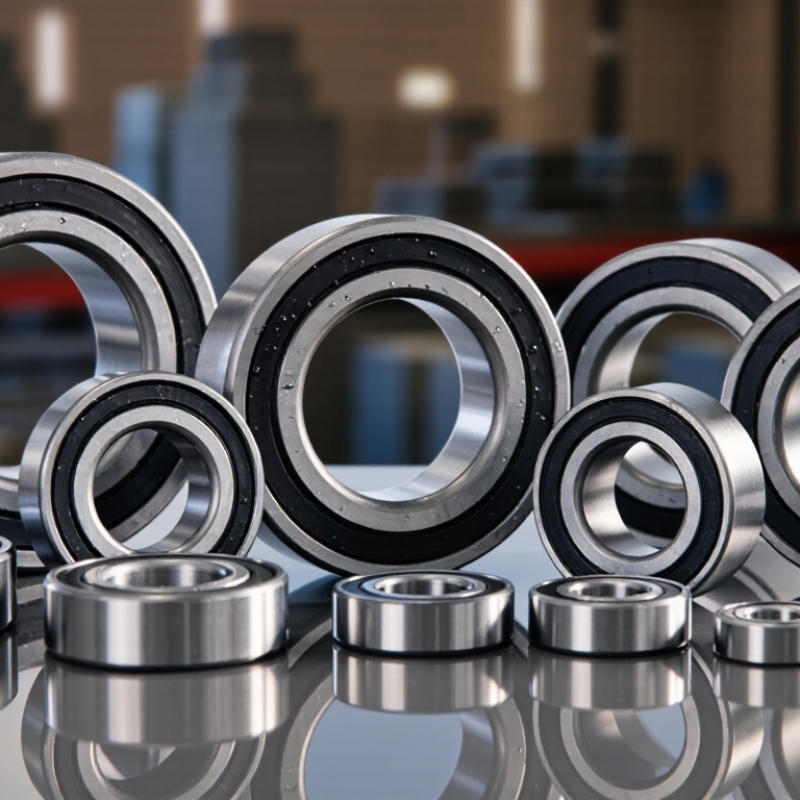
Sealed wheel bearings are compact units that support a vehicle wheel while allowing it to rotate with minimal friction. Each unit usually contains inner and outer races, rolling elements, a cage, grease, and protective seals. The races form smooth tracks. The rolling elements travel between them as the hub turns. Seals keep abrasive dust and water away from the grease-filled cavity. They also limit grease loss, although no seal remains perfect forever. Seals age.
When the wheel carries weight, the bearing transfers radial loads through the rolling elements. During cornering, it also handles axial loads from changing forces. Preload and internal clearance must match the application. Too much preload can create heat, while excessive clearance may cause play and noise. The result is often a humming sound that changes with road speed. In workshop inspections, I check looseness, rough rotation, seal damage, and heat marks. A visual check can mislead.
For buyers comparing sealed wheel bearing suppliers worldwide, technical consistency matters more than a low quoted price. Ask for material specifications, dimensional tolerances, load ratings, sealing details, and traceable test records. Supplier experience with automotive quality systems also deserves attention. I would not assume a sealed design needs no inspection. Road salt, impact damage, incorrect installation, and poor fit can shorten its service life. Pressing on the wrong ring may damage the race before the vehicle moves. That small mistake is easy to miss.
Leading Sealed Wheel Bearing Suppliers by Region
Top Sealed Wheel Bearing Suppliers Worldwide?
Leading Sealed Wheel Bearing Suppliers by Region
Regional suppliers often understand road conditions better than distant distributors. In North America, buyers commonly seek sealed bearings for long highway mileage, trailer loads, and winter salt exposure. Suppliers typically provide application guidance, batch traceability, and replacement support. Ask for documented radial-load ratings, seal materials, and temperature limits.
European suppliers often focus on compact designs, low noise, and strict dimensional consistency. These features matter in passenger vehicles, industrial carts, and automated equipment.
In Asia-Pacific, manufacturers serve large automotive and machinery markets. Many offer broad production capacity, custom tolerances, and faster volume scheduling. However, capacity alone does not prove reliable quality. Check inspection records and sample performance.
Latin American suppliers may prioritize dust resistance, local inventory, and practical delivery times. In the Middle East and Africa, heat, sand, and irregular maintenance can influence bearing selection. A supplier should explain how seals perform under these conditions, not just quote a low price. Ask for corrosion testing, grease specifications, and storage guidance. No regional list is perfect. Supply chains change, and smaller specialists may outperform larger factories in certain applications. I would compare three samples under the same load, speed, and contamination conditions before approving a long-term order. Field feedback still matters.
How to Select the Right Sealed Wheel Bearing Supplier
Choosing the right sealed wheel bearing supplier requires more than comparing worldwide price lists. In my experience, fit, sealing quality, and process control affect service life most. Request complete drawings, material grades, clearance values, and operating temperature limits. A reliable supplier should explain these details clearly, not hide behind general claims.
Check how the supplier verifies its bearings. Ask for dimensional inspection records, noise testing data, grease specifications, and contamination-control procedures. Traceable batch numbers matter when a bearing fails beside a busy production line. Practical suppliers also provide samples for load, speed, vibration, and water-ingress testing. Test them under your actual conditions. Laboratory results may not reflect dust, misalignment, or repeated shock.
Communication reveals operational maturity. Can the engineering team answer technical questions quickly? Can it adjust packaging for humidity and long storage? Review production capacity, quality certifications, audit access, and corrective-action records. A low price can look attractive. It can also hide inconsistent steel or weak seals. I once treated a supplier’s polished presentation as proof of quality; that judgment was too quick. Small sample differences later exposed the need for wider testing. Choose evidence over promises, while allowing time to question your own assumptions.
Top Sealed Wheel Bearing Suppliers Worldwide? How to Select the Right Supplier
A practical supplier comparison should verify the bearing type, load rating, sealing design, dimensional accuracy, operating conditions, and quality documentation. The chart below uses the ISO 281 life-calculation exponent, a standardized technical factor used to distinguish ball-bearing and roller-bearing load-life behavior.
Under ISO 281, the basic rating life is calculated with an exponent of 3 for ball bearings and 10/3 for roller bearings. When selecting a sealed wheel bearing supplier, confirm that published dynamic load ratings, seal specifications, tolerances, lubrication details, and test documentation match the intended application.