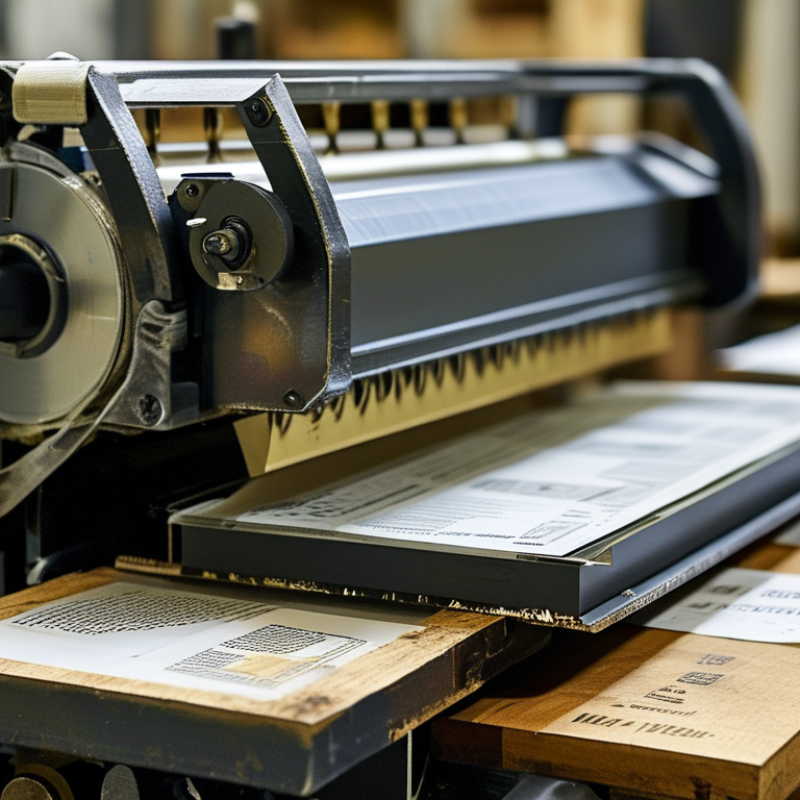
| 1 | Automatic Sheet-Fed Hot Foil Stamping and Embossing Press | Paperboard cartons, premium packaging, labels, book covers, greeting cards and commercial print. | Typical sheet size: approximately 500 × 350 mm to 1060 × 760 mm; foil width depends on the feeder and foil station. | Approximately 2,500–7,500 sheets/hour, depending on sheet size, foil coverage, embossing depth and substrate. | Heated platen or cylinder; commonly operated around 90–180°C, subject to foil and substrate specifications. | CE marking required for EU placement
Request EU Declaration of Conformity and risk assessment. | Verify NRTL listing or field evaluation
Check electrical panel and machine acceptance requirements. | Request current certificate
ISO 9001 applies to the manufacturer’s quality-management system, not automatically to the machine. | Interlocked access doors, guarding around platen and drives, emergency stops, anti-repeat control, two-hand control where applicable, hot-surface warnings and lockable main isolator. | EN ISO 12100; EN 60204-1; EN ISO 13849-1; EN 1010 series where applicable; OSHA 29 CFR 1910.212; ANSI B11.19; NFPA 79. | Declaration of Conformity, electrical drawings, safety-circuit validation, operating manual, preventive-maintenance schedule and factory acceptance test. |
| 2 | Automatic Roll-to-Roll Hot Foil Stamping Line | Flexible labels, narrow-web packaging, decorative films, synthetic papers and continuous web materials. | Typical web width: approximately 250–650 mm; roll diameter and core size vary by unwinder and rewinder design. | Approximately 30–120 m/min, depending on foil coverage, registration accuracy, drying requirements and web tension. | Heated stamping cylinder, heated die or heated nip; temperature and pressure must be matched to the foil system. | CE marking required for EU placement
Verify conformity of the complete integrated line, including unwinder and rewinder. | Verify NRTL or component approvals
Review control-panel construction and disconnecting means. | Request current certificate
Confirm certificate scope covers design, assembly and service activities. | Full guarding of rollers and nip points, interlocked doors, web-break protection, emergency-stop pull cords, tension-control safeguards and guarded rotating shafts. | EN ISO 12100; EN 60204-1; EN ISO 13849-1; ISO 13850; OSHA 29 CFR 1910.212; ANSI B11.19; NFPA 79. | Line layout, nip-point risk assessment, safety PLC validation, electrical schematics, web-path guarding drawings and commissioning checklist. |
| 3 | Sheet-Fed Cold Foil Transfer Press | Commercial print, folding cartons, security graphics, magazines, cosmetic packaging and metallic effects without heated dies. | Typical sheet size: approximately 450 × 320 mm to 750 × 1060 mm; format depends on the press platform. | Approximately 3,000–12,000 sheets/hour, depending on press speed, coating, foil transfer area and registration requirements. | Pressure-activated transfer using adhesive, coating or inline printing; the foil unit may operate without a heated stamping die. | CE marking required for EU placement
Request conformity documentation for the integrated coating, printing and foil modules. | Verify North American electrical compliance
Inspect control panel, wiring methods and component markings. | Request current certificate
Check the certificate issuer, validity period and manufacturing site. | Guarded impression and transfer rollers, interlocked covers, emergency stops, safe access to coating systems and controls for unexpected start-up. | EN ISO 12100; EN 60204-1; EN ISO 13849-1; EN 1010 series where applicable; OSHA 29 CFR 1910.212; NFPA 79. | Foil-transfer process specification, roller-gap procedure, safety validation report, electrical drawings and operator training records. |
| 4 | Rotary Hot Foil and Embossing Module for Label Presses | Self-adhesive labels, wine labels, pharmaceutical labels, flexible packaging and narrow-web decorative printing. | Typical web width: approximately 200–450 mm; repeat length commonly determined by the host press and rotary tooling. | Approximately 40–150 m/min, depending on die circumference, foil type, registration and substrate stability. | Heated rotary die or heated cylinder with controlled pressure and foil advance. | Assess as a partly completed or complete machine
Request incorporation instructions or a Declaration of Conformity, as applicable. | Verify host-machine integration
Confirm safety circuits, control voltage and enclosure requirements. | Request current certificate
ISO 9001 does not replace machine-safety certification. | Guarded rotary tooling, interlocked covers, protected foil unwind, emergency-stop integration with the host press and safe tool-change procedure. | EN ISO 12100; EN 60204-1; EN ISO 13849-1; ISO 13850; ANSI B11.19; NFPA 79; OSHA 29 CFR 1910.212. | Interface-control document, host-press integration drawing, safety-function test report, tool-change instructions and spare-parts list. |
| 5 | Semi-Automatic Flatbed Hot Foil Stamping Press | Short-run packaging, cards, invitations, leather goods, plastic components, promotional products and prototypes. | Typical platen area: approximately 200 × 150 mm to 600 × 400 mm; stroke and daylight vary by application. | Approximately 600–2,000 impressions/hour, depending on loading method, dwell time, registration and cooling time. | Electrically heated platen or die; common operating range is approximately 80–200°C, subject to tooling and foil. | CE marking required for EU placement
Request Declaration of Conformity, technical file reference and safety instructions. | Verify NRTL requirement
Check whether the buyer, insurer or local authority requires certification. | Request current certificate
Confirm the certificate covers the actual production facility. | Two-hand initiation or safeguarded foot control, fixed and movable guards, anti-repeat function, emergency stop, guarded hot surfaces and main disconnect. | EN ISO 12100; EN 60204-1; EN ISO 13849-1; ISO 13850; ANSI B11.19; NFPA 79; OSHA 29 CFR 1910.212. | Pressure and temperature limits, safety-distance calculations, electrical test report, user manual, tooling compatibility chart and acceptance checklist. |
| 6 | Continuous Web Hot Foil Laminating and Transfer Machine | Decorative films, synthetic paper, packaging webs, security materials and large-volume roll products. | Typical web width: approximately 300–1,300 mm; roll diameter and web thickness depend on the unwind and rewind configuration. | Approximately 20–100 m/min, depending on laminate construction, adhesive system, temperature and web tension. | Heated laminating nip, heated roller or thermal transfer head; cooling and tension control may be integrated. | CE marking required for EU placement
Verify conformity of the complete line and any adhesive or thermal-treatment module. | Verify NRTL and electrical-panel requirements
Review guarding and disconnecting means for the full line. | Request current certificate
Confirm the quality system covers process control and final inspection. | Guarded laminating nip, interlocked unwind and rewind areas, emergency-stop cable, over-temperature protection, web-break detection and guarded heated rollers. | EN ISO 12100; EN 60204-1; EN ISO 13849-1; ISO 13850; OSHA 29 CFR 1910.212; ANSI B11.19; NFPA 79. | Thermal-control validation, nip-point assessment, line-speed limits, safety PLC documentation, material compatibility data and installation requirements. |
| 7 | Digital Foil Transfer and Toner-Foil Finishing System | Short-run personalized packaging, invitations, labels, direct mail, photo products and variable-data graphics. | Typical sheet size: approximately 330 × 480 mm to 750 × 1,050 mm; compatible sheet thickness depends on the imaging platform. | Approximately 300–3,000 sheets/hour, depending on sheet size, image coverage, toner or coating system and finishing sequence. | Heat and pressure transfer to toner, polymer or adhesive image areas; operating temperature varies by consumable. | CE marking required for EU placement
Request conformity documentation for the printer, foil unit and any external exhaust system. | Verify electrical and electromagnetic compliance
Check power requirements, grounding and local approval conditions. | Request current certificate
Verify certificate scope for software, assembly and service processes where relevant. | Guarded heated rollers, interlocked service panels, over-temperature cut-off, emergency stop, protected paper path and safe access to consumable areas. | EN 60204-1; EN ISO 12100; EN ISO 13849-1 where safety-related controls apply; IEC 61000 series for EMC; FCC Part 15 for applicable equipment. | Electrical safety test results, EMC declaration, consumable safety data, software version record, maintenance instructions and heat-zone calibration record. |
| 8 | Large-Format Flatbed Foil Stamping and Embossing Press | Rigid boards, specialty packaging, signage, large book covers, decorative panels and oversized printed products. | Typical working area: approximately 600 × 800 mm to 1,500 × 2,000 mm; tooling and table configuration vary considerably. | Approximately 200–1,200 cycles/hour, depending on platen size, foil coverage, material handling and embossing force. | Large heated platen, heated die or controlled hot-stamp head; heat uniformity should be validated across the working area. | CE marking required for EU placement
Request machinery risk assessment and conformity evidence for the complete press. | Verify NRTL or local authority acceptance
Confirm suitability for the facility’s supply voltage and installation method. | Request current certificate
Review audit scope and certificate validity before purchase. | Perimeter guarding, light curtains or area scanners, two-hand controls where appropriate, emergency stops, guarded moving tables and hot-surface protection. | EN ISO 12100; EN 60204-1; EN ISO 13849-1; ISO 13855; ISO 13850; ANSI B11.19; NFPA 79. | Guarding layout, safety-distance calculation, force and pressure limits, lifting instructions, floor-loading data, electrical drawings and site-acceptance test. |
| 9 | Inline Foil Stamping Unit for Folding Carton and Converting Lines | Folding cartons, pharmaceutical boxes, food packaging, cosmetic cartons and high-volume converting operations. | Typical sheet format: approximately 500 × 350 mm to 1,200 × 900 mm; configuration depends on the host folder-gluer or die-cutter. | Approximately 3,000–10,000 sheets/hour, subject to the host line’s speed, register control and foil-saving system. | Inline rotary or flatbed hot foil station with foil-saving, register-control and waste-management functions. | Complete-line conformity required
Request evidence covering the interface between the foil unit and host converting line. | Verify integrated electrical compliance
Safety circuits must be tested across all connected modules. | Request current certificate
Do not treat ISO 9001 as proof of CE, UL or machine-safety compliance. | Interlocked line guards, guarded nip and die areas, synchronized emergency stops, safe setup mode, access-key control and guarded foil reels. | EN ISO 12100; EN 60204-1; EN ISO 13849-1; EN 1010 series where applicable; OSHA 29 CFR 1910.212; NFPA 79. | Interface risk assessment, safety-network architecture, line-speed and setup procedures, foil-waste controls, training records and commissioning report. |
| 10 | Specialty Foil Marking Press for Cylindrical and Irregular Parts | Plastic containers, tubes, caps, cosmetic components, molded parts, leather items and industrial identification products. | Typical part diameter: approximately 10–150 mm; marking length and fixture size depend on the component geometry. | Approximately 300–2,400 parts/hour, depending on loading, indexing, part geometry, foil coverage and curing or cooling time. | Heated type, heated wheel, heated stamp or localized thermal-transfer head with custom fixtures. | CE marking required for EU placement
Request conformity documentation for the press, feeder, fixture and guarding package. | Verify NRTL or facility approval needs
Review control-panel, grounding and machine-guarding requirements. | Request current certificate
Confirm the certificate identifies the actual manufacturing site and scope. | Guarded indexing and clamping mechanisms, fixture interlocks, protected hot head, emergency stop, safe loading mode and prevention of unexpected restart. | EN ISO 12100; EN 60204-1; EN ISO 13849-1; ISO 13850; OSHA 29 CFR 1910.212; ANSI B11.19; NFPA 79. | Part-fixture drawings, cycle-time validation, temperature-control records, safety-function test, tooling changeover instructions and spare-heater specifications. |