
Menü öffnen Menü schließen

What Are the Top Chemical IBC Tank Types in 2026?

Choosing the right Chemical IBC Tank in 2026 requires more than comparing capacity, price, or delivery time. Chemical compatibility remains the central decision. A tote holding dilute detergent may fail quickly with an aggressive solvent or oxidizing liquid. Small material differences matter.

As Daniel J. Kaczmarek, a chemical packaging consultant with decades of field experience, explains, “The best IBC is the one that matches the chemical, the handling method, and the risk.” This practical view guides the discussion ahead. It also prevents a common mistake: treating every 1,000-liter container as interchangeable.

The coming sections examine the leading Chemical IBC Tank types used across modern industrial supply chains. High-density polyethylene composite tanks offer broad chemical resistance and efficient handling. Stainless steel IBCs provide strength, durability, and easier cleaning for demanding applications. Conductive and antistatic models support safer movement of flammable liquids when correctly grounded. Insulated, heated, and food-grade designs serve more specialized operations.

There is no universal winner.

A tank can perform well in one plant and disappoint in another. Temperature, filling speed, valve design, storage duration, and forklift movement all influence performance. Even a certified container needs suitable inspection and maintenance. That point is easy to overlook.

This guide compares construction, protection, usability, and practical limitations. It also considers where each type may create extra cost or operational work. The goal is not to promote one design. It is to help buyers ask sharper questions before selecting a Chemical IBC Tank for 2026 operations.
What Are the Top Chemical IBC Tank Types in 2026?

What Is a Chemical IBC Tank and How Is It Used?

A chemical IBC tank is a reusable container designed to store and move liquids in larger volumes than ordinary drums. Most units hold about 1,000 liters, with a rigid inner bottle and protective outer cage. The inner bottle often uses high-density polyethylene for acids, cleaners, and other compatible chemicals. Stainless steel IBC tanks suit higher temperatures or aggressive liquids. Conductive models can help control static risks during filling and discharge. However, no tank type fits every chemical.

In daily operations, an IBC tank supports blending, temporary storage, transport, and controlled dispensing. Its bottom valve allows connection to hoses, pumps, or filling equipment. Experienced operators check the chemical’s safety data, concentration, temperature, and specific gravity before selection. They also inspect valves, seals, cages, and lifting points before use. A practical mistake is choosing by capacity alone. Compatibility can change with heat, pressure, or extended storage. Tank performance markings and applicable transport requirements should also be verified.

Tips: Confirm chemical compatibility with technical documentation, not assumptions. Keep tanks on level surfaces and protect them from sharp impacts. Label contents clearly, even during short-term storage. Clean residue safely and record inspection dates. If a tank looks acceptable but feels questionable, replace it or request a professional assessment. Small doubts deserve attention.

What Are the Top Chemical IBC Tank Types in 2026? - What Is a Chemical IBC Tank and How Is It Used?

A practical comparison of commonly used intermediate bulk container (IBC) tank designs for chemical storage, handling, and transport.

A chemical IBC tank is a reusable or single-trip container designed to hold and move liquids, powders, or granulated chemicals in intermediate quantities. Most liquid IBCs hold approximately 500–1,000 litres, although the suitable capacity depends on the tank design, chemical compatibility, transport regulations, and required UN performance rating.

Chemical IBC Tank Types and Typical Applications
IBC tank type Typical construction Common capacity range Suitable chemical applications Main advantages Important limitations
Rigid HDPE composite IBC High-density polyethylene inner bottle with a galvanized or coated steel cage and pallet base. Approximately 500–1,000 L Water-based chemicals, detergents, many acids, alkalis, additives, and industrial liquids when compatibility is confirmed. Lightweight, stackable, widely available, easy to handle with forklifts, and generally economical. Permeation, stress cracking, temperature limits, and chemical compatibility must be evaluated. Not suitable for every solvent or oxidizer.
Stainless-steel IBC Welded stainless-steel tank, commonly using corrosion-resistant grades selected for the chemical service. Approximately 500–1,500 L High-purity chemicals, corrosive liquids, solvents, food or pharmaceutical process liquids, and products requiring repeated reuse. Strong, durable, cleanable, reusable, and better suited to elevated temperatures than most plastic IBCs. Higher purchase weight and cost; the selected steel grade, weld quality, gasket material, and surface finish must match the chemical.
Carbon-steel IBC Welded carbon-steel vessel, sometimes internally lined or externally coated for specific services. Approximately 500–1,500 L Non-corrosive oils, lubricants, fuels, coatings, and industrial liquids compatible with steel or the selected lining. High mechanical strength, good impact resistance, and suitability for demanding industrial handling. Can rust or contaminate contents if unprotected; generally unsuitable for many corrosive chemicals without a verified lining.
Lined-metal IBC Metal structural shell with a chemically resistant internal lining, such as polymer or elastomer, selected for the service. Approximately 500–1,200 L Corrosive liquids that require metal strength but need an internal barrier between the chemical and the shell. Combines structural durability with improved corrosion protection and can reduce product contamination. Lining damage, pinholes, abrasion, or incompatibility can cause failure; inspection and maintenance are essential.
Flexible IBC Woven polypropylene or similar flexible fabric container, usually intended for dry bulk solids rather than liquids. Approximately 500–2,000 kg of dry material Powders and granules such as resins, mineral products, agricultural chemicals, and other dry bulk materials. Low tare weight, collapsible when empty, efficient storage, and reduced return-transport volume. Not normally suitable for free-flowing liquids; moisture, static electricity, lifting method, and fabric compatibility require careful control.
Insulated or heated IBC Plastic or metal IBC fitted with insulation, a heating jacket, heating blanket, or controlled warming system. Approximately 500–1,000 L Viscous resins, waxes, oils, adhesives, and temperature-sensitive liquids requiring controlled flow or protection from cold conditions. Helps maintain workable viscosity and can reduce crystallization or solidification during storage and dispensing. Requires temperature controls, electrical safety measures, and verification that heating will not create decomposition, pressure, or fire hazards.
UN-rated chemical IBC An IBC that has passed the applicable performance tests for its design type, such as pressure, drop, leakproofness, and stacking tests. Commonly 500–1,000 L for liquid service Regulated dangerous goods and hazardous chemicals when the packaging instruction, packing group, closure, and material are appropriate. Supports compliant transport when correctly selected, marked, filled, closed, inspected, and handled. A UN mark alone does not prove compatibility with every chemical. Regulations and approval requirements vary by transport mode and jurisdiction.

How Chemical IBC Tanks Are Used

Chemical IBC tanks are used for bulk storage, plant-to-plant transfer, road or sea transport, dosing, blending, and controlled dispensing. Selection should consider chemical compatibility, concentration, temperature, density, viscosity, pressure, static-control requirements, filling and discharge connections, pallet and lifting design, cleaning requirements, and applicable dangerous-goods regulations.

Note: Capacity ranges and material choices are typical industry values, not universal limits. Always confirm the manufacturer’s technical documentation, chemical-resistance data, tank inspection status, and applicable local, national, and international transport requirements before use.

Which Chemical IBC Tank Materials and Designs Are Available?

Chemical IBC tanks in 2026 are defined by material, wall structure, and service conditions. High-density polyethylene (HDPE) remains common for acids, alkalis, and many water-based formulations. It resists corrosion. However, heat, solvents, and sunlight can change its performance. Always confirm compatibility with a current chemical-resistance chart and supplier test data.

Composite IBCs combine an inner HDPE bottle with a galvanized or coated steel cage. The bottle provides chemical contact resistance, while the cage improves stacking and handling stability. Steel IBCs suit heavier loads, higher impact exposure, or products needing stronger barrier protection. Stainless steel versions support demanding sanitation and temperature requirements, but their cost and weight can be significant. Not every stainless grade behaves alike.

Design details matter as much as the shell. Look for tested construction where applicable, secure closures, pressure-relief options, and valves matched to the liquid. Top discharge, bottom discharge, and removable lids serve different filling and cleaning routines. Reinforced corners, readable level marks, and forklift access reduce handling errors. In practice, a tank that fits the warehouse may still fail at the filling station. That mismatch is easy to overlook. Review temperature cycles, transfer speed, cleaning method, and stacking height before approval. Field trials can expose small problems.

What Are the Top Chemical IBC Tank Types in 2026?

In 2026, the leading chemical IBC tank types include composite plastic, stainless steel, and temperature-controlled designs. Composite IBCs use a high-density inner bottle, protective cage, and pallet base. They suit many compatible liquids, including detergents, process chemicals, and water-based formulations. Their lighter weight can reduce handling effort and transport costs. However, chemical compatibility must be checked against concentration, temperature, and storage time. A familiar liquid is not automatically a safe match.

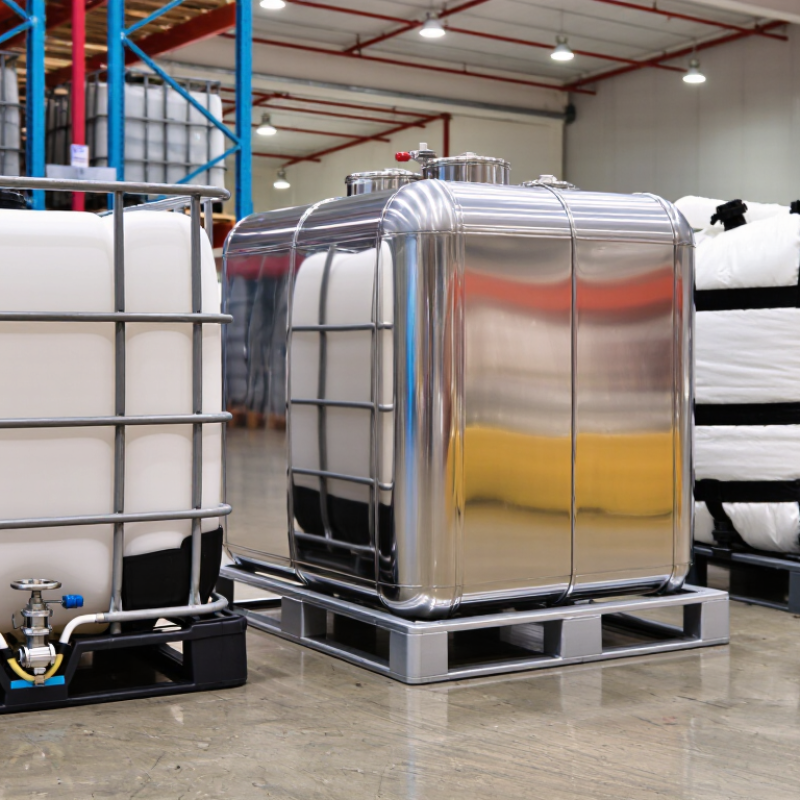
Stainless steel IBC tanks serve demanding applications requiring strength, repeated cleaning, and improved heat resistance. They are useful for concentrated chemicals, solvents, and higher-value liquids when the material is suitable. Surface finish matters. Weld quality matters too. Insulated or heated IBCs help control viscosity during cold storage and transfer. Some units include thermal jackets, insulation blankets, or temperature sensors. These features add cost and maintenance points. They are valuable only when the process truly needs them.

For flammable or static-sensitive liquids, anti-static designs, grounding provisions, and conductive components deserve careful review. Relevant testing and transport requirements still apply. A tank’s label, closure, gasket, valve, and vent should match service conditions. I would avoid ranking one type as universally best. That approach sounds confident, but it can fail in practice. A swollen gasket, overlooked headspace, or poorly cleaned outlet may create serious handling problems. Buyers should request compatibility data, inspection records, and clear filling limits before approval.

What Are the Top Chemical IBC Tank Types in 2026?

This comparison shows representative tare-mass ranges for common 1,000-liter chemical IBC designs. Rigid HDPE composite IBCs are widely used for general chemical distribution, stainless steel models support demanding or corrosive applications, carbon steel units suit durable industrial service, and flexible IBCs reduce empty-container weight. Actual specifications vary with wall thickness, fittings, protective cages, and certification requirements; the figures are not market-share estimates.

How Do You Choose the Right Chemical IBC Tank?

Choosing the right chemical IBC tank starts with the liquid, not the tank’s advertised capacity. A 1,000-liter container may suit one chemical and fail with another. Check chemical compatibility, concentration, temperature, density, and viscosity. High-density polyethylene composite tanks handle many common liquids, while stainless steel tanks may suit aggressive chemicals or repeated cleaning. Conductive designs can help control static risks during filling and discharge. They are not automatically suitable for every application.

Look closely at the tank’s construction. Examine the inner liner, frame, valve, gasket, and top opening. These small parts often decide whether daily handling stays reliable. Confirm that seals match the chemical and operating temperature. Ask for compatibility data, inspection records, and transport approvals from the supplier. Do not rely on color or general material names. “Chemical resistant” is too vague without test conditions.

Consider the working environment too. Will the tank sit outdoors under strong sunlight? Will forklifts move it across uneven floors? Will operators need a bottom valve, a wider opening, or easier rinsing? A reusable stainless steel unit may reduce waste over time, but its purchase and cleaning costs can be higher. A plastic composite tank may be practical, yet it can suffer from UV exposure or rough handling. This choice is not always perfect. Test a sample with the actual chemical, then review the result with trained safety and operations personnel. Small leaks usually begin as small assumptions.

What Safety and Compliance Standards Apply to Chemical IBC Tanks?

Chemical IBC tanks in 2026 must meet more than capacity and material requirements. The key issue is documented compliance. Under the UN Model Regulations, 23rd revised edition, dangerous-goods IBCs require design approval, drop testing, leakproofness testing, hydrostatic pressure testing, stacking tests, and lifting checks. A rigid plastic, composite, or metal IBC should display a valid UN marking. That marking identifies its construction type, performance level, and test approval.

Transport rules also change by route. ADR 2025 applies to road transport in participating countries, while the IMDG Code governs maritime shipments. Local rules may add inspection, grounding, ventilation, or chemical compatibility requirements. ECHA’s 2023 REF-11 enforcement report inspected 2,407 products and found 23% non-compliant. The figure concerns chemical classification and labelling, not IBC tanks specifically. Still, it shows how easily documentation gaps become operational risks.

Tips: Match the tank lining to the chemical. Check density, temperature, pressure, and permeation data. Inspect valves and gaskets before filling. Keep test certificates with each asset. Never treat an old UN mark as permanent approval. Requalification dates matter. A checklist can still miss corrosion beneath a frame or residue inside a valve. That is where practical inspection experience remains essential. Review the Safety Data Sheet, transport mode, filling procedure, and emergency plan together. Partial compliance is not enough.