
Menü öffnen Menü schließen

Top 10 ATV Sound Bar Manufacturers for Global Buyers

Choosing the right ATV sound system is rarely simple for global buyers. Outdoor noise, dust, vibration, and changing weather can quickly expose weak product design. This guide introduces the Top 10 ATV Sound Bar Manufacturers for Global Buyers, focusing on measurable performance rather than impressive claims. It examines audio output, enclosure protection, mounting stability, Bluetooth reliability, battery options, warranty support, and production capacity. Each ATV Sound Bar Manufacturer is considered from a practical purchasing perspective. Product specifications matter, but real-world consistency matters more.

The evaluation also considers factory experience, testing procedures, customization services, certifications, and communication quality. A manufacturer may offer powerful speakers, yet struggle with replacement parts or delivery planning. That weakness deserves attention. Some brands publish limited technical data, so certain comparisons may rely on available evidence and buyer feedback. This guide does not pretend every ranking is permanent. Markets change. Product lines change faster. Short listening tests can also miss long-term problems, such as rattling brackets or charging failures after repeated rides. Careful buyers should request samples, inspect internal construction, and confirm support terms before placing a large order. Look beyond volume.

The goal is practical clarity. Readers can compare suppliers with fewer assumptions and better questions. Experienced importers may already know several names, while new buyers may need more guidance. Both groups can benefit from a structured review of performance, reliability, and supplier credibility. A strong choice should sound clear on a moving trail, remain secure over rough ground, and arrive with dependable after-sales support. That standard is demanding, but it is useful.
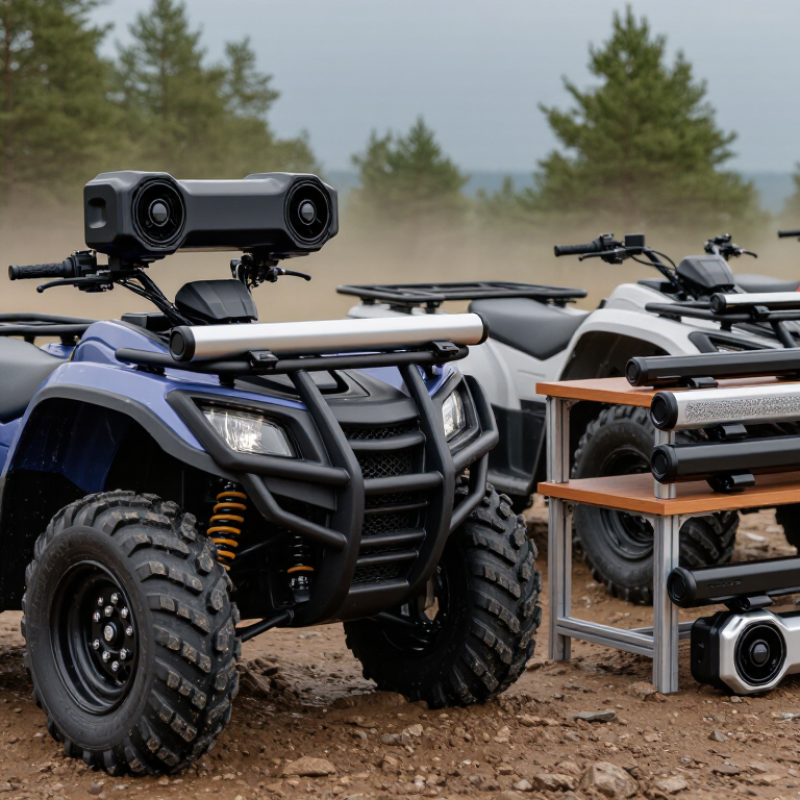
Top 10 ATV Sound Bar Manufacturers for Global Buyers

What Defines a High-Quality ATV Sound Bar Manufacturer

A high-quality ATV sound bar manufacturer begins with field experience, not attractive packaging. Its engineers understand mud, vibration, dust, rain, and sudden temperature changes. They test mounted units on rough trails, where loose brackets and rattling grilles quickly expose weak design. Real use matters.

Technical evidence should be easy to verify. Buyers should request power ratings measured under clear conditions, distortion results, frequency response, and battery-load data. An IP rating helps, but it does not prove long-term durability. Look for sealing details, corrosion-resistant fasteners, UV-tested materials, and connectors that remain secure after repeated movement. Small details matter.

Reliable manufacturers also provide installation drawings, wiring guidance, safety instructions, and consistent spare-part support. Their quality system should include sample inspections, production testing, traceable components, and documented corrective actions. Ask how they handle failures. Honest answers are valuable. No factory gets everything right, and a supplier that admits recurring issues may be more dependable than one promising perfection. Global buyers should also examine communication speed, packaging strength, shipping documentation, warranty terms, and response times across different markets. A polished sample is useful, but stable production is the real test.

How the Top 10 ATV Sound Bar Manufacturers Are Selected

Selecting the top 10 ATV sound bar manufacturers requires more than comparing loudness claims. The global automotive audio market was valued at about USD 10.9 billion in 2023, according to Fortune Business Insights’ 2024 report. That growth attracts suppliers with uneven testing practices. We assess documented manufacturing experience, production capacity, warranty terms, and international distribution. Independent evidence matters.

Outdoor durability receives heavier weighting. We check stated IP ratings against IEC 60529, then examine connector sealing, grille drainage, vibration resistance, and battery protection. A high wattage figure can mislead. Continuous RMS output is more useful than peak power for long trail rides. Bluetooth stability, control range, installation clarity, and replacement-part access also affect the ranking. Small details matter.

We compare at least three product samples when possible. Field tests include dust exposure, water spray, repeated vibration, and temperature changes. These tests are practical, not laboratory certification. Some manufacturers publish excellent specifications but provide limited failure data. That weakness cannot be ignored. Consumer reports and verified service records help balance marketing claims. The final list favors consistent evidence, not the loudest advertisement. Even so, supplier rankings remain provisional because firmware updates, factory changes, and regional warranty support can alter real-world performance.

Top 10 ATV Sound Bar Manufacturers for Global Buyers - How the Top 10 ATV Sound Bar Manufacturers Are Selected

A transparent, evidence-based framework for evaluating manufacturers without displaying company or brand names.

No. Evaluation Dimension Evidence Required Recommended Benchmark Weight Selection Method
01 Product Engineering Capability Technical datasheets, acoustic test reports, product drawings, and documented R&D resources. A dedicated product-development process with documented acoustic, mechanical, and electrical testing. 15% Award higher scores when specifications are complete, internally consistent, and supported by test evidence.
02 Outdoor Durability Ingress-protection test documentation and enclosure construction details. A declared IP rating tested under IEC 60529, with protection suitable for dust, splash, or water exposure. 14% Verify the exact IP code, test scope, and whether the rating applies to the complete assembled product.
03 Audio Performance Frequency-response charts, total harmonic distortion data, amplifier output conditions, and listening-test records. Comparable measurements reported at clearly stated voltage, distance, load, and testing conditions. 13% Give preference to manufacturers that publish measured performance instead of unsupported maximum-wattage claims.
04 Wireless and Wired Connectivity Wireless specification, pairing instructions, input/output list, and compatibility documentation. A clearly declared Bluetooth Core Specification version plus practical inputs such as AUX, USB, or wired power connections. 10% Check whether each connection is supported in the user manual and validated through product testing.
05 Vehicle Installation Fit Mounting dimensions, bracket drawings, vibration-test information, and wiring diagrams. Adjustable mounting hardware, secure fasteners, accessible wiring, and compatibility with common ATV roll-cage configurations. 10% Evaluate dimensional compatibility, installation time, bracket strength, and resistance to vibration.
06 Electrical and Product Safety Safety test reports, electrical protection details, declarations of conformity, and applicable market documentation. Protection against reverse polarity, overcurrent, overheating, and short circuits, with relevant compliance records. 10% Reject incomplete claims and score based on traceable reports from competent testing facilities.
07 Manufacturing Quality Control Quality-control procedures, inspection records, production traceability, and corrective-action processes. Documented incoming, in-process, and final inspections supported by batch or serial-number traceability. 10% Verify quality procedures through documentation, sample inspections, and consistent production records.
08 International Compliance Readiness Market-specific conformity documents, labeling files, user manuals, and restricted-substance declarations. Documentation aligned with the destination market, including applicable EMC, radio, electrical-safety, and environmental requirements. 8% Score the completeness, validity, and destination-market relevance of the compliance package.
09 Supply and Customization Capacity Production lead-time records, packaging specifications, customization options, and export documentation. Stable production planning, transparent minimum-order requirements, packaging suitable for international shipment, and practical customization support. 5% Use documented production and logistics information rather than unverified capacity statements.
10 Warranty and After-Sales Support Written warranty terms, spare-parts policy, troubleshooting resources, and service-response procedures. Clearly defined warranty coverage, replacement-part availability, multilingual documentation, and measurable response procedures. 5% Award points for transparent exclusions, accessible technical support, and documented service commitments.
Total Weighted Evaluation Score 100% Manufacturers are shortlisted only after document verification and product-level assessment.
Scoring note: Each dimension is scored from 0 to 5 using verifiable documentation. The weighted result is calculated as (dimension score ÷ 5) × assigned weight. Unsupported specifications, incomplete test records, or market-inappropriate compliance documents receive reduced scores.

Profiles of the Top 10 ATV Sound Bar Manufacturers

The leading ATV sound bar manufacturers differ in engineering priorities, not just advertising language. One specializes in compact enclosures for narrow roll cages. Another focuses on marine-grade sealing and corrosion-resistant fasteners. A third builds high-output systems for desert riding, where vibration is severe. I look closely at mounting strength, wiring access, and real listening distance.

A fourth manufacturer develops app-controlled units with quick pairing and simple presets. A fifth offers modular bars that accept separate subwoofers. The sixth emphasizes low-power operation for smaller batteries. The seventh produces rugged models with oversized control buttons. The eighth combines integrated lighting with sound, although lighting can increase installation complexity. The ninth supplies private-label products for distributors and often provides flexible packaging. The tenth concentrates on premium materials, detailed tuning, and extended warranty support.

Specifications still need careful checking. Peak wattage can sound impressive, but continuous output matters more on open trails. IP ratings help, yet poor cable routing can defeat good water protection. I have also seen strong speakers weakened by loose clamps and under-sized power cables. That is an easy detail to miss. Buyers should request frequency charts, fuse guidance, replacement-part policies, and testing evidence. A manufacturer with clear limitations may be more dependable than one promising extreme performance. Real-world fit remains imperfect, because ATV frames, riding speeds, and weather conditions vary widely.

Key Product and Performance Differences Among Leading Brands

Global buyers should compare ATV sound bar manufacturers by measured performance, not glossy wattage claims. Bluetooth SIG’s 2024 Market Update projects more than 5.4 billion Bluetooth device shipments annually by 2028. That growth increases connection options, but not necessarily trail reliability. Leading products differ in Bluetooth range, pairing stability, codec support, and control response. A practical test should measure uninterrupted audio across 10–15 meters, including engine vibration and partial obstruction. Peak power can impress briefly. RMS output matters more for sustained listening.

Weather protection creates another clear divide. Look for an IP rating tested under IEC 60529, sealed controls, corrosion-resistant fasteners, and drainage around the grille. A stronger enclosure may improve durability but add weight and reduce mounting flexibility. Battery models also vary sharply: claimed runtime often uses moderate volume, not highway-speed playback. Grand View Research valued the global wireless speaker market at approximately $8.93 billion in 2023, with a projected 21.2% compound annual growth rate through 2030. More products will enter the category, yet testing standards remain uneven.

Installation quality affects sound as much as the speaker itself. Front-facing drivers usually improve clarity, while compact enclosures may deliver less low-frequency depth. Equalizer presets can help, but aggressive bass often causes distortion near maximum volume. Some comparisons still reward loudness too heavily. Buyers should record distortion, charging time, idle drain, and vibration noise separately. Those details reveal differences that showroom listening can hide.

How Global Buyers Can Compare ATV Sound Bar Suppliers

Global buyers should compare ATV sound bar suppliers by verified performance, not catalogue photos. Grand View Research’s 2024 soundbar market report projects strong market growth through 2030, increasing supplier choices and quality gaps. Request measured output, frequency response, distortion, battery runtime, and charging-cycle results. A loud unit may still sound harsh beside an ATV engine.

Outdoor use requires stricter testing. Check the exact IP rating under IEC 60529, not vague “waterproof” wording. Ask whether testing covers dust, rain, vibration, mud, and temperature changes. Bluetooth SIG’s 2024 market update forecasts 5.4 billion Bluetooth device shipments annually by 2028. Therefore, buyers should confirm stable wireless performance, codec support, pairing distance, and firmware-update procedures. Certifications alone do not prove field reliability. That part is often overlooked.

Tips: Compare three suppliers using the same test playlist, noise level, distance, and battery conditions. Request samples from the same production batch. Review factory audit records, warranty terms, spare-part availability, MOQ, lead time, and payment protection. Ask for compliance documents relevant to your sales regions, including radio, battery, and charger requirements. A high IP rating does not guarantee strong audio. Neither does a low price guarantee savings. One practical mistake is trusting supplier claims before testing muddy gloves, vibration, and repeated power cycles. Leave room for improvement; real riding conditions expose weaknesses quickly.