Why is CNC Processing Essential for Modern Manufacturing?
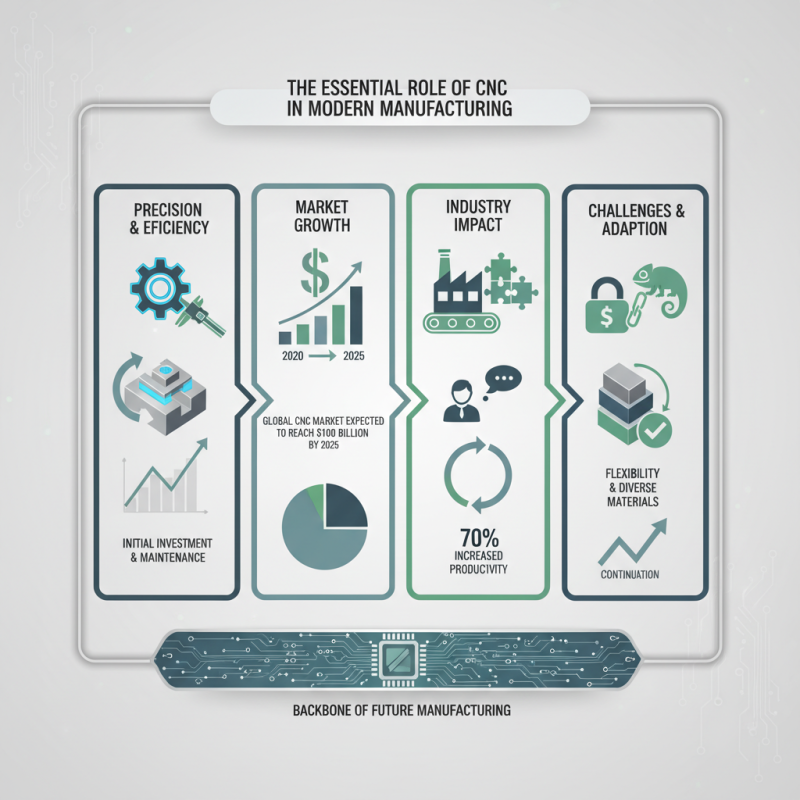
In today's competitive landscape, CNC processing plays a pivotal role in modern manufacturing. According to a recent industry report by MarketsandMarkets, the global CNC machine market is expected to reach $100 billion by 2025. This surge reflects a growing reliance on precision and efficiency in production. Renowned industry expert Dr. Emily Thornton emphasizes, "CNC processing is not just a trend; it's the backbone of future manufacturing."
The precision offered by CNC processing allows manufacturers to create complex parts with minimal waste. This contrasts sharply with traditional methods, which often lead to significant material loss. A survey by the National Association of Manufacturers found that 70% of companies using CNC technology reported increased productivity. However, the initial investment and ongoing maintenance can be daunting for smaller firms.
Despite these barriers, the flexibility of CNC processing cannot be overstated. It adapts well to various materials, ensuring manufacturers can meet diverse demands. The industry must continuously evaluate its practices to maximize the benefits of CNC technology while addressing these inevitable challenges.
Importance of CNC Processing in Modern Manufacturing Techniques
CNC processing plays a significant role in modern manufacturing. It allows for high precision and efficiency. The machines can create intricate designs, ensuring that parts fit perfectly. This level of precision is crucial in industries like aerospace and automotive.
However, not all CNC processes are flawless. Occasionally, errors can occur due to programming mistakes or machine malfunctions. These issues can lead to wasted materials and increased costs. Manufacturers must remain vigilant and regularly check their equipment to mitigate these risks.
Moreover, while CNC processing increases productivity, it can also lead to decreased manual skills among workers. As machines take over complex tasks, the reliance on technology grows. This shift may spark concerns about job security and skill relevance in the workforce. It’s essential for companies to balance automation with ongoing employee training to maintain a skilled workforce.
Key Advantages of CNC Technology Over Traditional Manufacturing Methods
CNC processing revolutionizes modern manufacturing. It offers remarkable precision. According to a report by
MarketsandMarkets, the CNC machine market is expected to reach
$117.5 billion by 2026. This growth stems from the demand for accuracy and efficiency.
One key advantage of CNC technology is
automation. Machines operate continuously with minimal downtime. Traditional methods rely heavily on skilled labor, leading to longer production cycles. In contrast, CNC machines can produce thousands of parts with
consistent quality in a fraction of the time.
Another significant benefit is design flexibility. CNC allows for
complex geometries that are difficult or impossible to achieve through traditional methods. This capability enables manufacturers to optimize designs for weight and performance. However, not all designs translate well into CNC production.
Manufacturers must consider material types and machine capabilities. Balancing innovation and practical limitations remains a challenge in the industry.
Applications of CNC Processing Across Various Industries
CNC processing plays a pivotal role across diverse industries. In aerospace, precision is non-negotiable. Reports show that up to 85% of airplane components require CNC machining. This ensures high accuracy and reduced waste. Even minor discrepancies can lead to significant problems in flight safety.
In the automotive sector, CNC processing aids mass production and customization. Nearly 60% of car parts are produced using CNC machines. This technology allows for rapid prototyping. It enables manufacturers to test and iterate designs efficiently. Yet, challenges endure. There is often a steep learning curve, and many small manufacturers struggle with up-to-date skills.
The medical field also benefits greatly from CNC processing. Customized implants and surgical instruments are often created using this technology. Around 70% of orthopedic devices are CNC manufactured. This precision can improve patient outcomes significantly. However, the initial investment can be daunting for smaller enterprises. Balancing quality with cost-efficiency remains a critical challenge.
Why is CNC Processing Essential for Modern Manufacturing? - Applications of CNC Processing Across Various Industries
| Industry |
Applications |
Benefits |
CNC Technologies Used |
| Aerospace |
Component manufacturing, prototyping |
High precision, weight reduction |
CNC Milling, CNC Machining |
| Automotive |
Engine components, interior parts |
Cost efficiency, automation |
CNC Turning, Wire EDM |
| Medical Devices |
Surgical instruments, implants |
Sterility control, customization |
CNC Laser Cutting, CNC Milling |
| Electronics |
Circuit boards, enclosures |
Precision, fast production |
CNC Router, Laser CNC |
| Furniture |
Custom designs, parts fabrication |
Creativity, reduced waste |
CNC Router, Edge Banding CNC |
Impact of CNC Processing on Precision and Efficiency in Production
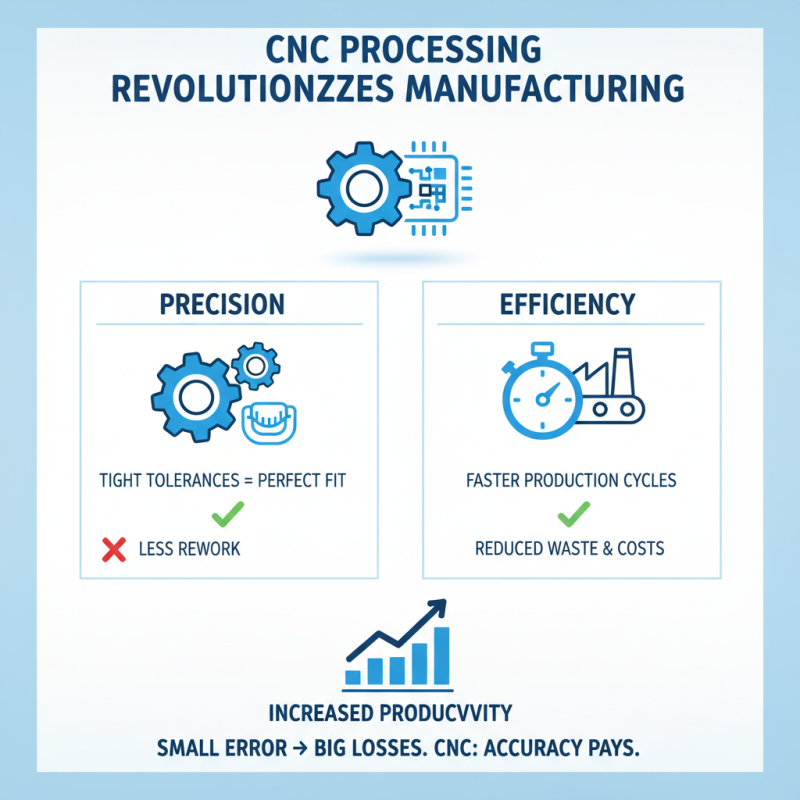
CNC processing revolutionizes modern manufacturing. Its impact on precision and efficiency is significant. With CNC machines, manufacturers can achieve tight tolerances. This means parts fit perfectly, reducing the need for rework. A small error can lead to large consequences, often translating into lost time and resources.
CNC technology allows for complex designs to be executed with ease. However, not all designs translate well into production. Some may require adjustments that can delay timelines. A balance between creativity and practicality is essential. Efficiency shines through when machines operate seamlessly. But downtime due to programming errors or tool wear can offset these gains.
In practice, the integration of CNC machines demands ongoing operator training. A skilled operator can identify issues early. Their expertise directly affects the production quality. While CNC processing offers remarkable benefits, it also presents challenges. Continuous improvement is key in harnessing its full potential. Embracing these challenges leads to better processes and outcomes.
Future Trends in CNC Technology and Their Implications for Manufacturing
The future of CNC technology promises exciting developments for the manufacturing industry. Automation is becoming more widespread. Advanced algorithms and machine learning are enhancing efficiency. Machines can now perform complex tasks with minimal human intervention. This shift will reshape workforce dynamics. Workers might need new skills to keep pace.
Sustainability is also a growing trend. Manufacturers are looking for eco-friendly practices. CNC machines can reduce waste through precision cutting. Yet, not all firms are adopting these methods. Resistance to change can hinder progress. The industry needs to address these challenges openly.
Customization is gaining traction as well. Consumers demand unique products. CNC technology allows for tailor-made solutions quickly. However, this requires investment in technology and training. Smaller firms may struggle with these costs. Balancing innovation and affordability will be crucial for many. The road ahead holds both promise and challenges.
Future Trends in CNC Technology and Their Implications for Manufacturing