How to Choose the Right Steel Stud for Your Construction Project?
When planning a construction project, selecting the right materials is crucial. Among these materials, the Steel Stud stands out as a preferred choice. Steel Studs offer durability and strength, making them ideal for various structures. However, choosing the correct Steel Stud involves more than just picking a type; it requires understanding their specifications and applications.
Steel Studs come in various sizes and thicknesses. This variation can affect the overall integrity of your project. Your choice should depend on factors like load-bearing requirements and the environment. Understanding these details can be overwhelming, yet it is vital for ensuring safety and efficiency. Missteps in selection may lead to structural issues down the line.
Moreover, every Steel Stud is not created equal. Quality and manufacturer reputation are essential to consider. Purchasing from established suppliers ensures reliability. It is okay to seek advice from experienced professionals or to consult industry guidelines. After all, making educated decisions regarding Steel Studs can significantly impact your construction project's success. Remember, careful consideration pays off in the long run.
Understanding the Different Types of Steel Studs Available
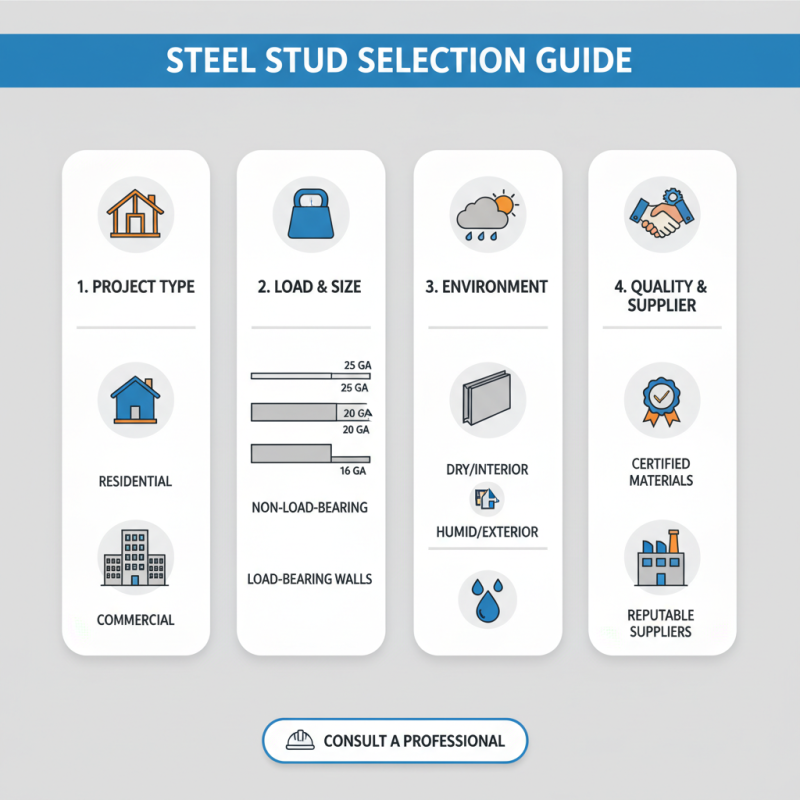
When embarking on a construction project, understanding the types of steel studs is crucial. Steel studs are available in various shapes and sizes. The most common types include galvanized steel studs, which resist rust and corrosion. They are ideal for areas prone to moisture. There's also the light-gauge steel stud, typically used for interior walls. These are easier to handle and can be cut with standard tools.
Not all studs are created equal. Some may not be suitable for heavy loads. It's essential to evaluate the weight-bearing capacity required for your project. This is where knowledge of load classifications comes in handy. A steel stud's gauge also affects its strength and application. A 20-gauge stud offers more strength than a 25-gauge one but is heavier. Balancing weight and strength is critical.
Researching local building codes can provide valuable insights. They often dictate which type of stud is appropriate for specific applications. Industry standards may vary, affecting your choice. Always consider seeking expert advice when unsure. Mistakes can be costly, impacting the project timeline and budget. Investing time in understanding steel studs will lead to a better construction experience.
Evaluating the Load-Bearing Capacity of Steel Studs
When evaluating the load-bearing capacity of steel studs, several factors come into play. The gauge of the steel is critical; thinner gauges tend to buckle under heavy loads. Steel studs typically come in different gauges, ranging from 20 to 14. A 14-gauge stud can support a heavier load than a 20-gauge stud. Therefore, selecting the right gauge for your project ensures adequate support.
Another vital aspect to consider is the spacing of the studs. Conventional spacing is usually 16 or 24 inches on center. Closer spacing can increase load-bearing capacity substantially but may lead to wasted materials. Misjudging the required spacing can lead to structural issues, forcing costly corrections.
Building codes play a significant role in the selection process. It's essential to consult local regulations and guidelines that specify load requirements for different applications. Relying solely on manufacturer specifications may not always align with these codes. An understanding of the local standards can guide you in making informed decisions to optimize both safety and structural integrity.
Factors to Consider for Steel Stud Size and Thickness
When selecting the right steel stud for your construction project, size and thickness are crucial. Steel studs come in various dimensions, typically measured in gauge. Thicker studs provide greater strength. However, they can also be more challenging to work with. A common misconception is that thicker always means better. It’s essential to match the stud thickness to your project’s specific needs.
Consider the load the studs will bear. For interior walls, lighter gauge steel may suffice. But for supporting heavier structures, a thicker gauge is necessary. Additionally, the height of the wall can influence the stud choice. Taller walls often need more robust studs to ensure stability. Environmental factors should also be analyzed. Areas prone to heavy winds or seismic activity require adequately sized studs.
Cost is an important factor, too. Thicker and longer steel studs cost more. Make sure to assess your budget while balancing quality and strength. Don't forget about fire ratings in your project. Certain installations may require specific thicknesses to meet safety codes. Evaluating all these factors can lead you to the right steel stud for your project.
Comparing Cost and Quality of Various Steel Stud Brands
When selecting steel studs for construction, cost and quality are key. A recent industry report reveals that steel stud prices can vary significantly. The cost per linear foot may range from $2 to $4, depending on the brand and specifications. However, the cheapest option isn't always the best choice.
Quality plays a crucial role in durability and performance. Some studies indicate that lower-quality steel may result in structural issues over time. For instance, it is estimated that using inferior materials may increase repair costs by up to 25% in a project's lifecycle. This is a hidden expense that could overshadow initial savings.
Evaluating product certifications is essential. High-quality steel studs often comply with specific manufacturing standards. These certifications can assure you of a product’s strength and reliability. In the competitive market, brands that prioritize rigorous testing often emerge as leaders. Balancing price and quality will lead to a more sustainable choice in the long run. Consider these factors carefully to avoid future regrets.
Installation Techniques for Steel Studs in Construction Projects
When working with steel studs, installation techniques are crucial for ensuring a strong and durable structure. Start by selecting the appropriate type of steel stud based on your project needs. Familiarize yourself with the specific stud sizes and gauges available, as they affect the overall stability and strength. Proper measurements are essential to avoid costly mistakes.
Before installation, prepare your workspace. Clear the area of debris and unnecessary items. Tools should be within reach to maintain efficiency. Use appropriate fasteners suited for steel to ensure a secure fit. Tips for a successful installation include pre-drilling holes when needed. This can help prevent the steel from warping or splitting.
Another important aspect is aligning the studs correctly. They should be spaced according to building codes or specific design plans. Misalignment can lead to structural issues later on. Always double-check your measurements before securing the studs. Remember, patience is vital during installation. Rushing may lead to errors that can compromise your project.
How to Choose the Right Steel Stud for Your Construction Project?
This chart illustrates the weight of different gauges of steel studs commonly used in construction projects. Selecting the appropriate gauge is crucial for ensuring structural integrity and proper installation.