How to Choose the Best Welding Machines for Your Needs?
Choosing the right Welding Machines can significantly impact your welding projects. The variety of options available can be overwhelming for beginners and professionals alike. Each machine has distinct features designed for specific tasks.
Consider your welding needs carefully. The process may require different machines based on materials, thickness, and project types. For example, MIG welding machines are great for beginners. They are easy to use and versatile for thin metals. TIG welding machines offer precision, ideal for intricate work. However, they demand more skill and practice.
It is crucial to understand the specifications of each welding machine. Factors like power source, portability, and duty cycle will influence your choice. Price ranges also vary widely. Investing in higher-quality equipment may yield better results. Reflect on your experience level and long-term goals. The right choice should align with your skill and future projects.
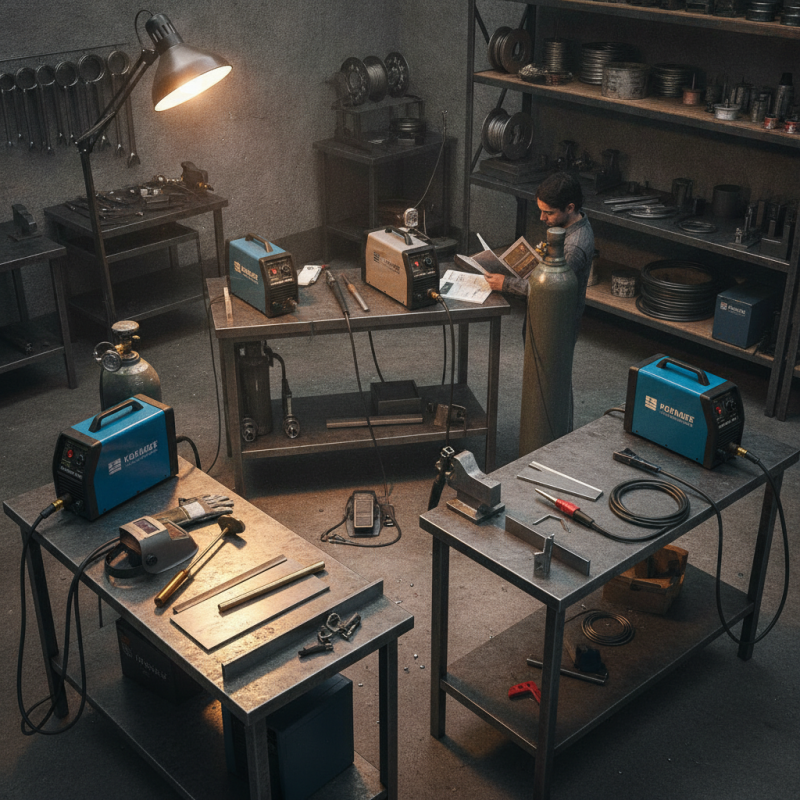
Understanding Different Types of Welding Machines Available in the Market
When selecting a welding machine, it’s vital to understand the different types available. Each type serves specific applications. Stick welding machines, for instance, are versatile. They are great for outdoor work due to their ability to handle wind and contamination. According to industry reports, stick welding constitutes about 40% of the market share. Their simplicity and portability are key advantages.
Mig welding machines are popular for their speed and ease of use. They provide a continuous wire feed, ideal for thin metals. Surveys show that around 30% of welders prefer MIG for sheet metal projects. Despite their benefits, they require an inert gas supply, which may limit outdoor use. Understanding these limitations is crucial for effective project planning.
TIG welding machines deliver precision. They are perfect for intricate work on materials like aluminum and stainless steel. However, not everyone finds TIG easy to master. The learning curve can be steep. Reports indicate that only 15% of new welders choose TIG initially. Balancing the complexity of the machine and project requirements can be challenging. Selecting the right machine hinges on understanding these nuances in technology.
Key Factors to Consider When Choosing a Welding Machine
Choosing the right welding machine involves several critical factors. The first aspect is the welding process itself. Different techniques, like MIG or TIG welding, require specific machines. Each method has its strengths and weaknesses. Understanding your project needs is essential. It shapes your choice effectively.
Power options also matter. Consider the amp range required for your work. Machines with lower amps are good for thin materials. Higher amps are suited for thicker materials. Evaluate the input voltage. Some machines work with standard household outlets. Others need industrial power sources.
Another key factor is portability. If you plan to work in various locations, weight and size become crucial. Lightweight models are easier to transport but may lack some features. Always check reviews and expert opinions. They can provide insights into reliability and performance. It's wise to reflect on your long-term needs versus immediate tasks.
Assessing Your Specific Welding Projects and Material Requirements
When assessing your specific welding projects, understanding the materials you'll work with is crucial. Different metals require different welding methods. For instance, aluminum is often welded using TIG or MIG processes due to its reflective nature and thermal conductivity. In contrast, steel can be effectively welded with a broader range of techniques. A survey from the American Welding Society indicates that 40% of welders face challenges when selecting appropriate machines for various metals.
Another important factor is the thickness of the materials. Thicker metals often need more powerful machines capable of deeper penetration. For example, welding a 1-inch steel plate may necessitate equipment over 200 amps. According to a recent industry report, about 30% of welding failures are related to improper machine specifications. This highlights the need for a precise match between project requirements and machine capabilities.
It's vital to consider your own skill level too. Beginners might struggle with advanced machines designed for professionals. Many sources suggest starting with versatile machines that allow for a mix of techniques. As you grow, you can invest in more specialized equipment. Understanding these factors can help avoid frustration and improve welding quality.
Comparison of Welding Machine Types Based on Common Welding Applications
Evaluating Budget and Long-Term Investment in Welding Equipment
When evaluating budget versus long-term investment in welding equipment, it's essential to analyze your needs. A recent industry report from the American Welding Society highlights that nearly 70% of businesses prioritize quality over initial cost. Investing in high-quality welding machines may seem expensive upfront. However, durable equipment can lead to lower maintenance costs and increased productivity. Over five years, the total cost of ownership for a reliable unit can decrease significantly.
Consider the importance of operational efficiency. A less expensive machine may fail twice as often. This could lead to costly downtimes and missed deadlines. In sectors like construction and manufacturing, time is money. An unreliable welder might save initial funds but could cost over $25,000 in lost productivity annually.
Think about training and support as well. Premium machines often come with better customer service and easier-to-understand manuals. User-friendly equipment can reduce training time, which translates to faster project completion. While it may feel tempting to opt for cheaper models, reflecting on the long-term implications is vital. Balancing immediate budget constraints with future needs will lead to more informed decisions.
Reading Reviews and Recommendations for Reliable Welding Machines
When selecting a welding machine, reading reviews is crucial. Many users share their experiences online. These insights often highlight strengths and weaknesses that you may not find in product specifications. Pay attention to detailed reviews. They can provide real-world performance information that specs alone cannot.
Consider recommendations from professionals. Experts in the field can offer perspectives based on extensive use. Their insights help you understand which machines withstand heavy usage. Look for common themes in reviews. If several users mention durability or ease of use, it’s worth noting.
Not every review is perfect. Some might focus too much on minor flaws. Filter through the noise to find genuine feedback. A balance of pros and cons will give you a clearer picture. Assess how issues raised in reviews affect your specific needs. This deeper understanding will lead you to a more informed decision.