Menü öffnen Menü schließen

China Top 10 Wiper Motor Equipment Manufacturers?

China has become a major production base for automotive components, including Wiper Motor Equipment. According to the China Association of Automobile Manufacturers, China produced more than 30 million vehicles in 2023. OICA reported global vehicle production above 93 million units that year. These figures show the scale of demand facing component suppliers.

However, volume alone does not prove manufacturing strength. A reliable wiper motor manufacturer must control torque, current draw, noise, sealing, and cycle life. Suppliers also need stable testing systems and traceable production records. In practical use, a motor may face rainwater, winter ice, road dust, and repeated windshield cycles. Small weaknesses become visible quickly.

This overview examines ten Chinese Wiper Motor Equipment manufacturers through a buyer’s perspective. The evaluation considers product range, engineering capability, factory capacity, quality systems, customization, and export experience. Industry research from MarketsandMarkets and Grand View Research identifies vehicle electrification, safety expectations, and rising production as important automotive component trends. Those trends support continued demand for compact and efficient motor systems.

A ranking can still hide important differences. Public information is often incomplete. Some companies promote impressive capacity but provide limited test evidence. That matters. Buyers should verify ISO certifications, endurance data, electromagnetic compatibility results, and customer references before selecting a supplier. Price is useful, but it should not replace reliability. This guide offers a practical starting point, not a final purchasing decision.->___

China Top 10 Wiper Motor Equipment Manufacturers?

Wiper Motor Equipment Manufacturing in China: Industry Overview

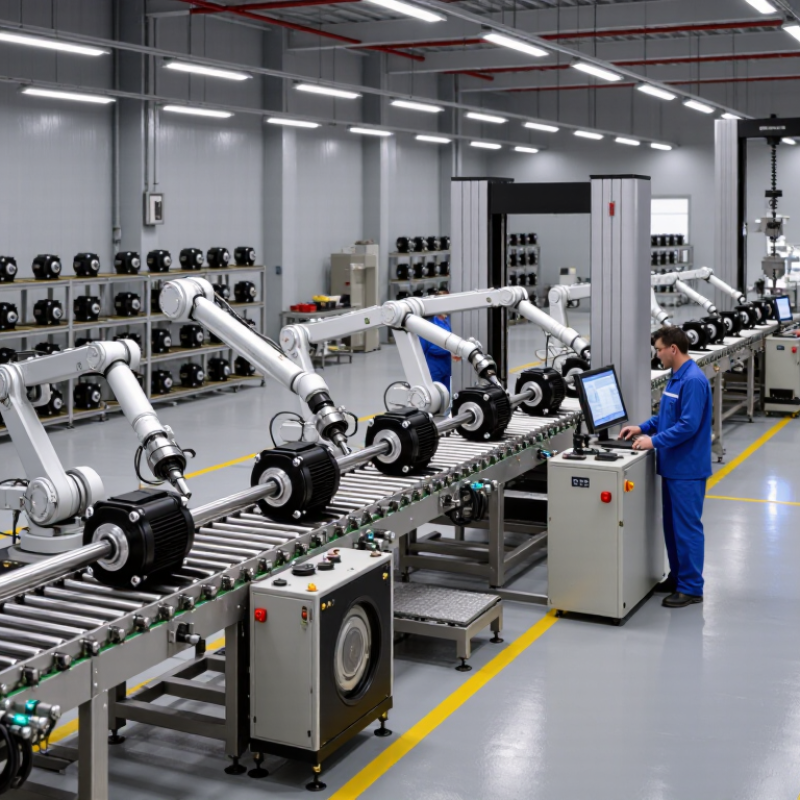
China’s wiper motor equipment manufacturing sector supports automotive suppliers with automated, flexible production systems. Demand is growing for compact motors, quieter operation, and stronger quality control. Equipment builders commonly provide coil winding machines, shaft assembly presses, gear riveting units, balancing stations, and end-of-line testers.

The strongest manufacturers usually combine mechanical design with electrical testing expertise. Their systems may check torque, current, noise, speed, and reverse-load performance. A reliable production line also records serial numbers, test results, operator actions, and maintenance history. This traceability helps engineers locate defects before shipment. It also supports audits and process improvement.

Factory experience matters.

During supplier evaluations, buyers should inspect sample runs, fixture accuracy, cycle-time stability, and spare-part availability. A polished showroom can mislead. Real performance appears during continuous production, especially after several hours of operation. Some suppliers offer impressive automation but weak software documentation. Others provide dependable machines but limited customization. This trade-off deserves careful review. China’s top ten equipment manufacturers are often compared by integration capability, service response, validation records, and their ability to adapt machines for different motor sizes. A practical audit should include production data, worker training records, safety controls, and acceptance-test results rather than relying only on brochures.

Key Criteria for Evaluating Chinese Wiper Motor Equipment Manufacturers

China Top 10 Wiper Motor Equipment Manufacturers

When evaluating Chinese wiper motor equipment manufacturers, begin with production experience, not catalog size. A reliable supplier should explain its winding, gear reduction, sealing, and final testing processes clearly. Ask to inspect sample machines, calibration records, and operator instructions. Factory visits can reveal details that brochures often hide, such as loose wiring, crowded workstations, or poorly protected sensors.

Technical capability deserves careful testing. Check whether the equipment measures motor torque, rotation speed, current draw, noise, and temperature rise. Request test results under realistic voltage conditions, including cold-start and repeated-cycle tests. A strong manufacturer can provide traceable data for each batch and explain how failed units are isolated. Ask for spare-part availability, software update procedures, and response times for remote support. Small details matter.

Documentation shows professional maturity. Look for clear drawings, risk assessments, maintenance schedules, and electrical safety records. Quality certificates are useful, but they should support real evidence, not replace it. Speak with engineers who will handle commissioning, rather than relying only on sales staff. Their answers should be specific. Vague promises deserve caution. I would also compare delivery performance across several projects, because one successful installation proves little. My own evaluation would include a pilot order, although this adds time and cost. That inconvenience may expose problems before full production begins.

China’s Top 10 Wiper Motor Equipment Manufacturers

China’s Top 10 Wiper Motor Equipment Manufacturers represent a competitive manufacturing sector. These companies typically produce winding machines, assembly lines, gear inspection systems, and end-of-line testing equipment. Their solutions support passenger vehicles, commercial vehicles, and replacement-part production. Strong manufacturers combine mechanical accuracy with stable software control. They also provide installation guidance, operator training, and maintenance support.

A reliable supplier should show practical factory experience, not only attractive catalog images. Inspect sample machines, wiring layouts, safety guards, and test reports before making a decision. Important details include torque measurement, noise testing, overload protection, cycle testing, and production traceability. Experienced engineers should explain how the equipment handles different motor sizes and production speeds. Some suppliers offer excellent automation, but documentation may remain incomplete. That weakness deserves attention.

Tips: Request a live trial with your own motor components. Check repeatability after several operating hours. Ask for spare-parts availability and response times. Compare energy use, changeover time, and rejected-unit data. A ranking is never perfectly neutral; factory scale does not always equal better service. Independent verification and careful site visits can reveal more than a polished presentation.

Production Technologies and Quality Control Standards

China Top 10 Wiper Motor Equipment Manufacturers: Production Technologies and Quality Control Standards

Reliable wiper motor equipment depends on controlled production, accurate testing, and repeatable process data. Leading Chinese manufacturers commonly combine CNC machining, automated winding, rotor balancing, and programmable assembly stations. These systems reduce variation in shaft alignment, coil resistance, and gear engagement.

The details matter. A vision camera checks connector position before final assembly. Torque sensors record every critical screw operation. End-of-line testers measure current draw, rotation speed, noise, and parking accuracy under different loads. Some production lines also use thermal cycling, vibration testing, and moisture resistance checks. Calibration records should remain traceable to verified instruments. ISO 9001 systems provide a useful foundation, while automotive projects may require stricter process controls and customer-specific validation.

Quality control should begin with incoming materials, not the final inspection table. Inspectors can verify magnet strength, copper wire diameter, bearing clearance, and plastic dimensions through sampling plans. Statistical process control helps reveal gradual drift before failures increase. Supplier audits and batch identification add further protection. Still, no production line is perfect. A small fixture error can create repeated defects across thousands of units. Equipment manufacturers should review rejected samples honestly, update work instructions, and test corrective actions under real operating conditions. That discipline builds confidence more effectively than polished brochures.

China Top 10 Wiper Motor Equipment Manufacturers? - Production Technologies and Quality Control Standards
No. Anonymous Manufacturer Profile Primary Wiper Motor Applications Motor Architecture Core Production Technologies Automation and Assembly Equipment Quality Control Standards Typical End-of-Line Tests Traceability Practices Typical Production Capacity
1 Profile A
Large-scale automotive motor producer
Passenger vehicles, light commercial vehicles, SUVs and buses Permanent-magnet DC motor with worm-gear reduction and integrated park switch Cold heading CNC gear hobbing Rotor balancing Automated winding Automatic armature winding, commutator assembly, bearing pressing, grease dispensing and servo-controlled final assembly ISO 9001; IATF 16949 for automotive production; incoming inspection based on ISO 2859-1 sampling principles Torque, speed, current draw, noise, vibration, park-switch function, dielectric strength and no-load current Barcode or QR-code tracking by housing, rotor, gearbox and final assembly lot Typically 1–3 million wiper motors per year, depending on product mix and production shifts
2 Profile B
Integrated motor and gearbox manufacturer
Front windshield systems, rear wipers and compact utility vehicles 12 V and 24 V permanent-magnet DC motors with compact worm-drive gearboxes Progressive stamping Plastic injection molding Gear shaving Automatic riveting Multi-station rotary assembly lines, vision inspection, automatic fastener feeding and controlled lubricant application ISO 9001; IATF 16949 where applicable; ISO 14001 environmental management commonly used for export-oriented plants Gear backlash, output torque, rotational direction, current consumption, sealing condition and abnormal-noise screening Electronic batch records linked to work orders, operator stations and test results Approximately 500,000–1.5 million units per year for medium-to-large production programs
3 Profile C
Commercial vehicle motor specialist
Trucks, buses, agricultural machinery and construction equipment High-torque 24 V DC motor with reinforced gearbox and thermal protection Heavy-gauge stamping Copper welding Rotor dynamic balancing Powder coating Automatic coil winding, resistance welding, press-fit assembly, load testing and motor housing leak inspection ISO 9001; customer-specific automotive quality requirements; process control using SPC and measurement-system analysis High-load torque, stall current, thermal rise, insulation resistance, vibration, endurance cycling and waterproofing checks Serial-number control for motors, gear sets, electrical terminals and final test records Usually 200,000–800,000 units per year, with capacity configured for high-load applications
4 Profile D
High-volume passenger-car supplier
Passenger cars, crossover vehicles and electric vehicles Compact 12 V permanent-magnet motor with low-noise planetary or worm reduction Automated coil insertion Commutator turning Laser marking Precision gear molding Inline dimensional inspection, camera-based component verification, automatic screwdriving and closed-loop torque control IATF 16949 production framework; ISO 9001 quality system; PPAP, FMEA, control plans and MSA commonly applied Electrical performance, angular park position, operating current, sound-pressure level and simulated rain-load testing Full traceability from raw material lot to finished motor, including automated test-data storage Often above 1 million units per year for standardized passenger-vehicle platforms
5 Profile E
Modular wiper-system manufacturer
Front and rear wiper modules, linkage assemblies and replacement motors Permanent-magnet DC motor available with different shafts, connectors and gearbox ratios CNC turning Die casting Plastic overmolding Automated press fitting Flexible assembly cells, programmable torque tools, connector presence detection and automated functional testing ISO 9001; ISO 14001 commonly maintained for environmental control; customer-specific inspection plans for automotive projects Direction, speed, torque, park position, connector polarity, current draw and mechanical interference tests Lot-level traceability with production-date coding and inspection records retained according to customer requirements Approximately 100,000–600,000 units per year, depending on the number of variants
6 Profile F
Export-oriented motor manufacturer
Passenger vehicles, trailers, recreational vehicles and aftermarket applications 12 V and 24 V brushed DC motor platforms with replaceable or integrated park mechanisms Automatic armature winding Die-cast housing Gear machining Salt-spray protection Semi-automated assembly lines supported by vision systems, digital torque tools and automated electrical test benches ISO 9001; RoHS and REACH material declarations for applicable export markets; incoming and final inspection procedures No-load current, operating speed, output torque, noise, vibration, insulation resistance and connector tests Batch numbers recorded on labels and linked to inspection certificates and shipment documentation Commonly 100,000–500,000 units per year for mixed OEM and aftermarket production
7 Profile G
Precision component-focused manufacturer
Compact passenger cars, motorcycles and specialty vehicles Small permanent-magnet DC motor with compact spur or worm gearing Fine-blanking Micro gear cutting Automatic balancing Ultrasonic cleaning Precision presses, automated bearing insertion, camera inspection and programmable electrical characterization ISO 9001; dimensional control using calibrated equipment; SPC applied to critical dimensions and functional characteristics Start-up torque, speed-current curve, noise spectrum, park accuracy, bearing play and thermal endurance Critical components controlled by lot number, machine number, shift and inspection timestamp Approximately 80,000–400,000 units per year for low-noise and compact motor designs
8 Profile H
Durability-testing-oriented manufacturer
Vehicles used in severe weather, commercial fleets and off-road environments Sealed permanent-magnet DC motor with enhanced corrosion protection and heavy-duty gearing Sealed housing assembly Gasket compression control Gear heat treatment Protective coating Automated seal installation, controlled press fitting, leak testing, torque-angle monitoring and environmental test equipment ISO 9001; IATF 16949 for qualified automotive programs; environmental and corrosion testing based on customer specifications Water ingress, salt spray, high-low temperature cycling, endurance operation, overload, stall and insulation tests Test results stored against product serial number or production batch, with nonconformance records maintained Normally 50,000–300,000 units per year for specialized and heavy-duty programs
9 Profile I
Aftermarket and replacement motor producer
Replacement motors for common passenger cars, vans and light trucks Direct-replacement 12 V brushed DC motors with application-specific shafts and connectors CNC machining Automatic winding Plastic molding Functional calibration Modular workstations, barcode-based picking, automatic electrical test fixtures and final visual inspection ISO 9001; RoHS and REACH compliance commonly documented for international aftermarket sales Fitment verification, rotation direction, speed, current, torque, noise, park function and dimensional checks SKU, batch and date-code traceability, with inspection reports maintained for each shipment lot Approximately 50,000–250,000 units per year across multiple replacement applications
10 Profile J
Flexible low-to-medium volume manufacturer
Special-purpose vehicles, buses, agricultural equipment and customized platforms Configurable 12 V or 24 V DC motor with selectable shaft, connector and gear-ratio options Flexible machining Small-batch winding Rapid tooling Manual-assisted assembly Programmable assembly fixtures, digital inspection tools, controlled manual operations and universal test benches ISO 9001; documented process inspection; customer-specific validation plans for customized products Voltage, current, speed, torque, direction, park position, vibration and basic temperature-rise testing Batch traceability covering material certificates, assembly records, test results and final inspection status Typically 20,000–150,000 units per year, with shorter production runs and higher customization
Data note: Manufacturer identities and brand information have been intentionally omitted. Capacity figures are representative industry ranges rather than audited company disclosures. Applicable certifications, testing procedures and production capabilities should be verified directly through current certificates, process audits, PPAP documentation and product-specific validation reports.

How to Select the Right Chinese Wiper Motor Equipment Manufacturer

China Top 10 Wiper Motor Equipment Manufacturers

How to Select the Right Chinese Wiper Motor Equipment Manufacturer

Selecting a Chinese wiper motor equipment manufacturer requires more than comparing quotations. Check its engineering records, factory capacity, and testing discipline. Ask for equipment layouts, process drawings, and recent production references. A capable supplier should explain torque testing, sweep-angle calibration, noise measurement, and endurance cycling clearly.

Request a sample run before signing a large order. Observe how the equipment handles motor alignment, connector placement, sealing checks, and automatic fault detection. Inspect the control system, spare-parts list, safety protection, and operator instructions. Test results should include dates, equipment numbers, and measurable limits. Vague reports create expensive doubts.

Look beyond the initial price. Confirm installation support, training hours, remote assistance, and warranty conditions. Ask whether software updates and replacement sensors remain available after delivery. Factory audits can reveal practical details, such as cable management, calibration labels, and workshop cleanliness. Small details matter.

One lesson deserves attention: the cheapest machine may not reduce total cost. A lower quotation once seemed attractive, but slow troubleshooting affected production planning. I also learned that technical English needs checking; simple words can hide different meanings. Let both teams approve drawings line by line. Require realistic delivery milestones, documented acceptance tests, and clear responsibility for modifications. Reliability grows from evidence, not confident promises.

China Top 10 Wiper Motor Equipment Manufacturers? How to Select the Right Chinese Wiper Motor Equipment Manufacturer

A practical 100-point evaluation model for comparing wiper motor equipment suppliers without relying on company or brand names.

The recommended evaluation model gives the highest weight to equipment performance, process capability, quality-system evidence, testing coverage, and after-sales support. Buyers should verify certificates, sample results, production capacity, traceability, spare-parts availability, and total cost before selecting a Chinese wiper motor equipment manufacturer.