


2026 Best CNC Cutting Machine Types for Global Buyers
Global buyers entering 2026 face a wider CNC cutting market than ever before. Fiber laser, plasma, waterjet, oxy-fuel, and CNC router systems now serve different materials, budgets, and production speeds. Grand View Research estimates that the global CNC machine market will continue expanding strongly through 2030, supported by automation, aerospace demand, and reshoring. MarketsandMarkets also identifies digital integration and multi-axis capability as major purchasing priorities.
The numbers look impressive. Shop-floor decisions remain difficult. A 6-kilowatt fiber laser may cut thick steel quickly, but it can exceed the needs of a small fabrication workshop. A waterjet handles heat-sensitive materials, yet its pump and abrasive costs require careful planning. Buyers must examine duty cycles, nesting software, service coverage, operator training, energy use, and spare-part availability. Deloitte’s 2024 smart manufacturing research found that many manufacturers view connected production as a competitive priority, but implementation challenges remain significant.
Professor Yusuf Altintas, a leading machining researcher, has emphasized, “Machining is a science, not an art.” That principle matters when comparing cnc cutting technologies. Specifications alone do not guarantee reliable output. Material thickness, tolerance, edge quality, floor space, and local technical support can change the final result. This guide compares the best CNC cutting machine types for global buyers in 2026, using practical performance criteria and current industry evidence. Forecasts are useful, but they are not shop-floor truth.
CNC Cutting Machines: Definition, Functions, and Core Technologies
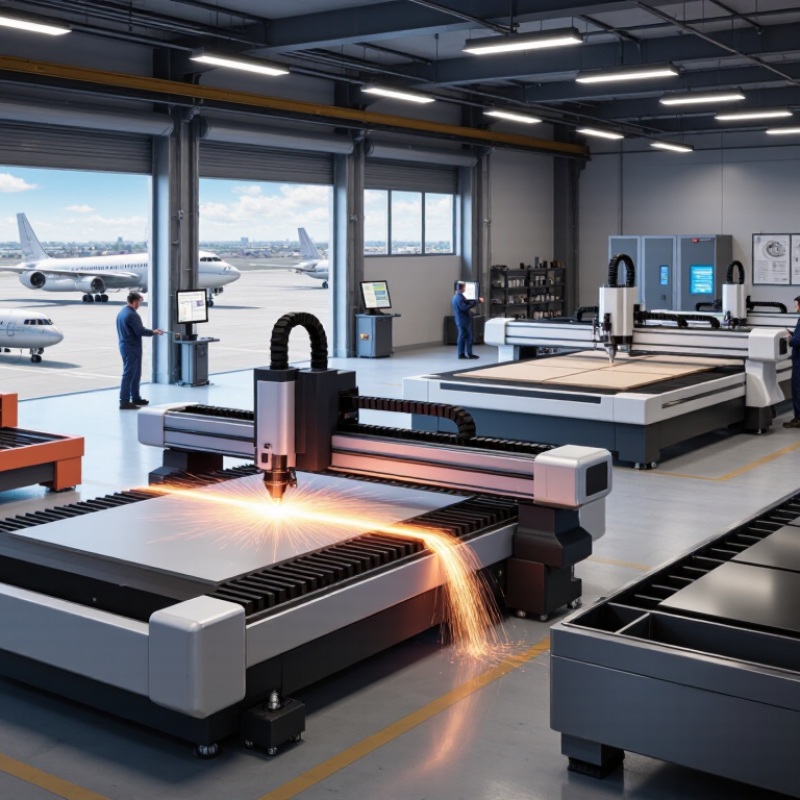
CNC cutting machines are computer-controlled systems that convert digital drawings into precise cutting paths. They shape sheet metal, wood, plastics, stone, and composites with repeatable accuracy. Common types include laser, plasma, waterjet, oxy-fuel, router, and CNC knife machines. Each uses a different energy source. Laser systems concentrate heat into a narrow beam, while waterjets cut without creating a heat-affected zone.
Their core technologies include CAD/CAM software, servo motors, motion controllers, linear guides, and automatic tool calibration. A modern machine can read G-code, adjust feed rates, and monitor cutting conditions. The choice depends on material thickness, edge quality, production volume, and operating cost. Grand View Research estimated the global CNC machine market at approximately USD 83.6 billion in 2023, with strong growth expected through 2030. However, market figures vary because reports define “CNC machines” differently. That detail deserves attention.
Tips: Match the cutting method to the material first. A laser may leave heat marks on thin plastics. A waterjet usually costs more to operate, but it protects sensitive surfaces. Ask suppliers for sample cuts, tolerance records, energy data, and service response times. Check the software workflow, too. A powerful machine can still waste hours when programming feels awkward. My practical concern is often overlooked: operators need training, not just manuals. Good hardware cannot fully correct poor setup, unstable material, or rushed maintenance.
2026 Best CNC Cutting Machine Types for Global Buyers - CNC Cutting Machines: Definition, Functions, and Core Technologies
| CNC Machine Type | Definition and Main Function | Core Cutting Technology | Typical Materials | Typical Cutting Thickness | Typical Accuracy | Key Advantages | Main Limitations | Common Global Applications |
|---|---|---|---|---|---|---|---|---|
| CNC Router | A computer-controlled rotary cutting machine used for profiling, pocketing, engraving, drilling, and 2D or 3D shaping. | Rotating carbide or diamond cutting tools driven by a spindle; commonly uses 3-axis, 4-axis, or 5-axis motion. | Wood, MDF, plywood, plastics, foam, composites, non-ferrous metals, and some aluminum alloys. | Approximately 3–100 mm, depending on material, spindle power, tool diameter, and machine rigidity. | About ±0.10–0.30 mm for many production setups. | Versatile; supports cutting, engraving, drilling, and 3D relief work; relatively low operating cost. | Produces tool forces, dust, chips, and possible burrs; generally unsuitable for efficient ferrous-steel cutting. | Furniture, signs, cabinetry, architectural panels, plastic fabrication, prototypes, and non-ferrous metal parts. |
| CNC Fiber Laser | A non-contact machine that uses a focused fiber-generated laser beam to cut sheet, plate, tube, and profile materials. | Thermal melting and vaporization with assist gas, typically oxygen, nitrogen, or compressed air; automated focus and height control are common. | Carbon steel, stainless steel, aluminum, brass, copper, galvanized steel, and other reflective metals with suitable settings. | Approximately 0.5–30 mm for many industrial systems; higher-power systems can process thicker plate. | About ±0.05–0.15 mm for well-maintained machines and suitable materials. | High speed on thin and medium sheet, narrow kerf, low mechanical force, excellent repeatability, and strong automation potential. | Initial investment can be high; optics, assist-gas quality, heat effects, and reflective materials require careful control. | Sheet-metal fabrication, electrical enclosures, automotive components, machinery parts, kitchen equipment, and general manufacturing. |
| CNC CO₂ Laser | A laser cutting and engraving machine using a gas laser source, traditionally selected for non-metallic materials and some thin metals. | Infrared laser energy causes localized melting, burning, or vaporization; assist air or gas removes debris from the kerf. | Acrylic, wood, paper, fabric, rubber, leather, plastics, foam, glass marking applications, and thin coated or mild steel with suitable equipment. | Approximately 0.1–25 mm for common non-metal applications. | About ±0.10–0.30 mm in typical production conditions. | Good engraving quality, broad non-metal compatibility, and smooth edges on many sheet materials. | Lower electrical efficiency than fiber lasers, more optical alignment and maintenance, and limited performance on reflective metals. | Sign making, packaging, textiles, acrylic displays, wood products, leather goods, and craft production. |
| CNC Plasma Cutter | A thermal cutting machine that separates electrically conductive metal using a high-temperature plasma arc. | An ionized gas jet melts metal and ejects the molten material from the cut zone; torch height control improves cut consistency. | Mild steel, stainless steel, aluminum, copper alloys, and other electrically conductive metals. | Approximately 1–50 mm for common systems; higher-capacity systems may cut thicker plate at reduced speed. | About ±0.20–0.50 mm for many production applications. | Fast on medium and thick conductive metal, lower purchase cost than many laser systems, and tolerant of surface scale. | Creates heat-affected zones, dross, noise, fumes, and a wider kerf; cannot cut non-conductive materials. | Structural steel, agricultural equipment, repair shops, metal fabrication, ship components, and heavy machinery. |
| CNC Oxy-Fuel Cutter | A thermal cutting machine that preheats steel and uses a high-purity oxygen jet to oxidize and remove the material. | Flame preheating followed by oxygen-driven oxidation; typically controlled by CNC gantry motion. | Primarily carbon steel and low-alloy steel; generally unsuitable for stainless steel and aluminum without specialized processes. | Approximately 6–300 mm or more, depending on torch design, gas pressure, and machine capacity. | About ±0.50–1.50 mm for common heavy-plate work. | Cost-effective for very thick carbon steel, simple to operate, and suitable for large cutting beds. | Slow on thin material; large heat-affected zone, more distortion, wider kerf, and significant gas-safety requirements. | Heavy fabrication, bridges, mining equipment, pressure-vessel components, shipbuilding, and structural steel work. |
| CNC Waterjet Cutter | A cold-cutting machine that uses a high-pressure water jet, often mixed with abrasive, to cut a wide range of materials. | Mechanical erosion from high-pressure water and abrasive particles; no significant thermal cutting zone is created. | Steel, stainless steel, aluminum, stone, glass, ceramics, rubber, composites, plastics, and laminated materials. | Approximately 1–150 mm for many applications; specialized systems can process thicker sections. | About ±0.05–0.15 mm with precision equipment and controlled process conditions. | No heat-affected zone, minimal material distortion, broad material compatibility, and good performance on thick or heat-sensitive parts. | Higher water and abrasive consumption, slower cutting than lasers on thin sheet, and greater floor-space and wastewater requirements. | Aerospace parts, stone and tile, architectural inlays, composites, machinery components, and heat-sensitive materials. |
| CNC Knife Cutter | A digital cutting table that uses a tangential, oscillating, rotary, or drag knife to cut flexible and semi-rigid sheet materials. | Mechanical blade cutting, often combined with vacuum hold-down, automatic tool changing, and camera-based registration. | Cardboard, corrugated board, textiles, leather, vinyl, gasket materials, rubber sheet, foam, felt, and thin composites. | Approximately 0.5–20 mm, depending on blade type, material density, and tool configuration. | About ±0.10–0.30 mm for many flat-sheet applications. | No thermal discoloration, low fumes, low material waste, and efficient for short runs or customized shapes. | Blades wear over time; limited to materials that can be mechanically cut and generally unsuitable for thick metal. | Packaging, apparel, upholstery, advertising graphics, automotive interiors, seals, insulation, and prototypes. |
| Wire EDM | A precision CNC process that cuts electrically conductive workpieces with a continuously moving electrically charged wire. | Controlled electrical discharges remove material in a dielectric fluid; the wire does not physically contact the workpiece. | Hardened tool steel, carbide, nickel alloys, titanium, copper alloys, and other electrically conductive materials. | Approximately 0.5–300 mm, depending on machine capacity and workpiece geometry. | About ±0.0025–0.010 mm for precision work, with achievable results dependent on passes and calibration. | Extremely precise; cuts hardened materials and complex contours with very low mechanical cutting force. | Only electrically conductive materials; relatively slow; requires dielectric management and careful process control. | Molds, dies, precision tooling, gears, medical components, aerospace parts, and intricate hardened-metal profiles. |
Related Posts
-
Why Choose CNC Processing for Your Manufacturing Needs?
-
Unleashing China's Premier CNC Machining for Global Market Leadership
-
How to Choose a CNC Vertical Machining Center in 2026
-
Unlocking the Technical Specifications of the Best Vertical CNC Machine for Peak Performance
-
5 Reasons the Best High Speed CNC Machines Boost Production Efficiency by 30%
-

What is a Milling Machine and How Does it Work in Manufacturing Process